
This article is provided for general informational purposes only and does not constitute legal, financial, or tax advice.
Reading this content does not create an attorney-client or professional advisory relationship.
Laws vary by jurisdiction and are subject to change. You should consult a qualified professional regarding your specific circumstances.
Grace just called, frantic. Her mother passed away last month, and Grace discovered a handwritten codicil to the trust, dated after the original trust was signed. It leaves Grace’s childhood coin collection – worth a surprising $15,000 – to her cousin instead of her. The problem? The codicil wasn’t properly witnessed. Now, Grace fears a legal battle to override it, potentially tying up the estate for months and costing her family thousands in probate fees. These late-stage changes to estate plans, while seemingly minor, are often the source of intense family conflict and legal challenges.
The instinct to quickly jot down a change to a will or trust using a codicil is understandable. It feels simpler than rewriting the entire document. However, that convenience comes with significant risk. California law is very specific about the requirements for valid codicils, and even a seemingly small oversight can invalidate the entire amendment. A failed codicil doesn’t simply revert back to the original plan; it throws everything into question, potentially forcing full probate – a lengthy and expensive court process – even if the primary estate is relatively small.
The issue isn’t just about signatures and dates. It’s about ensuring those changes align with your overall estate planning goals. Often, clients make a last-minute adjustment without realizing the ripple effect it will have on the rest of their plan. For example, changing a specific bequest can inadvertently impact tax implications or disrupt the carefully balanced distribution of assets intended for other beneficiaries.
What Happens if a Codicil is Invalidated?
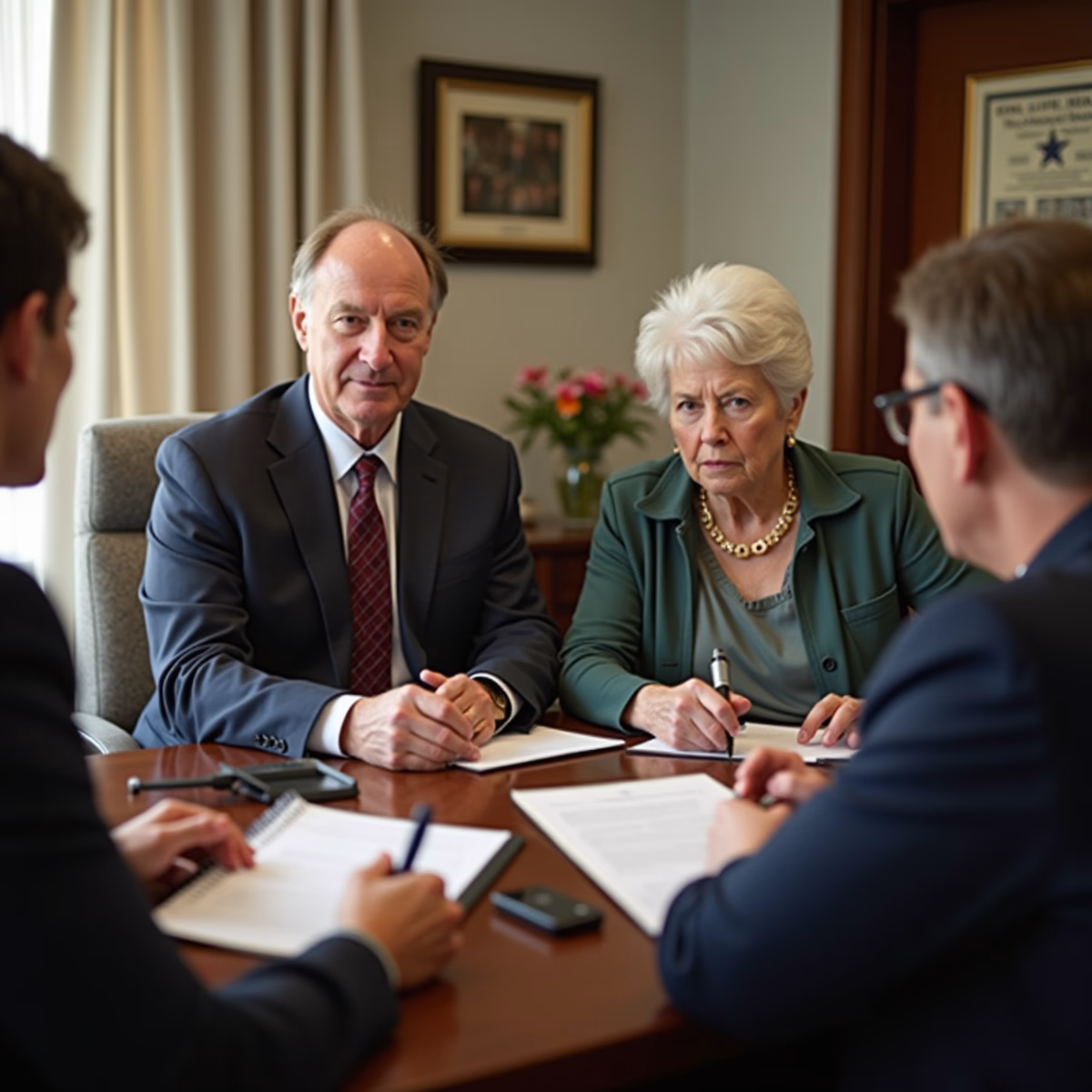
If a codicil is invalidated, assets may force full probate; however, for deaths on or after April 1, 2025, estates under $208,850 (per CPC § 13100) may still qualify for simplified procedures. This limit is set until 2028. A rejected codicil won’t magically revert to the original will or trust. Instead, California law dictates that we revert to the prior valid estate plan, which could be an earlier will or trust, or even intestate succession (the state’s default rules for distributing assets when there’s no valid estate plan). This can create unintended consequences and potentially leave assets distributed in a way you never intended.
When is a Codicil Appropriate?
Codicils are best reserved for simple changes – adding or removing a beneficiary, updating an address, or making a minor adjustment to a specific bequest. Anything more complex should prompt a full review and potential restatement of the entire estate plan. Consider a full review if you’ve experienced major life events like a divorce, remarriage, the birth of a child or grandchild, or significant changes in your financial situation. These events often necessitate a complete overhaul of your plan, not just a quick fix with a codicil.
How Can I Avoid Codicil Challenges?
-
Proper Execution: Ensure any codicil is signed and dated correctly, and witnessed by two adults who are not beneficiaries of the estate. Notary requirements vary, but generally, it’s always best to have the codicil notarized to provide an extra layer of authenticity.
Comprehensive Review: Before signing any codicil, review the entire estate plan to ensure the changes don’t conflict with other provisions. It’s easy to overlook potential conflicts when focusing solely on the specific item you’re amending.
Consider a Trust Restatement: For significant changes, a full trust restatement – rewriting the entire trust document – is often the safest and most effective approach. This eliminates any ambiguity and ensures your wishes are clearly documented.
Digital Asset Planning: A standard codicil often fails to include the specific RUFADAA language (CPC § 870) required to bypass federal privacy laws, potentially leaving your heirs locked out of crypto-wallets and email accounts.
What About Updating LLC Ownership?
Clients with business interests, particularly LLCs, need to be especially diligent. Changes to ownership or operating agreements must be reflected not only in the estate plan but also in the official LLC records. As of March 2025, FinCEN has exempted domestic U.S. LLCs from BOI reporting; however, foreign-registered entities in the U.S. still face mandatory filing requirements and potential penalties. Failing to update these records can create complications during probate and potentially expose your estate to liability.
Why a CPA-Attorney Combination is Key
After 35+ years practicing as both an Estate Planning Attorney and a CPA here in Temecula, I’ve seen firsthand how crucial it is to consider both the legal and tax implications of every estate planning decision. A codicil that saves on legal fees today could easily result in significantly higher estate taxes down the road. For example, altering the terms of a trust could inadvertently trigger a taxable event or reduce the step-up in basis for inherited assets, increasing capital gains taxes for your beneficiaries. My dual expertise allows me to proactively identify and address these potential pitfalls, ensuring your estate plan is not only legally sound but also tax-efficient.
Addressing Old Wills and Tax Law Changes
Many clients have wills or trusts drafted years, even decades, ago. Tax laws have changed dramatically since then. The 2026 ‘tax cliff’ was averted by the OBBBA, which permanently increased the Federal Estate Tax Exemption to $15 million per person effective Jan 1, 2026. Old formula clauses should be reviewed to ensure they don’t over-fund trusts under these new limits. What was once a prudent strategy may now be unnecessarily complex or even detrimental to your beneficiaries.
Don’t let a seemingly simple change to your estate plan become a source of family conflict or legal headaches. A proactive approach, coupled with expert legal and tax guidance, is the best way to ensure your wishes are honored and your loved ones are protected.
What standards do California judges use to determine a will’s true meaning?
In California, a last will and testament is reviewed under probate standards that focus on intent, capacity, and execution. Clear drafting reduces ambiguity, limits misinterpretation, and helps families avoid unnecessary conflict during estate administration.
| Final Stage | Factor |
|---|---|
| IRS | Address final expenses. |
| Payout | Manage assets. |
| Heirs | Protect beneficiaries. |
For California residents, understanding how intent, authority, and compliance interact is one of the most effective ways to protect family harmony and estate integrity. A will that anticipates probate scrutiny is far more likely to be honored as written and far less likely to become the source of unnecessary conflict.
Primary Legal Authorities Governing Probate and Estate Administration
-
Probate & Local Court Rules:
Riverside Superior Court – Probate Division
Official Riverside County probate rules (Title 7), filing procedures, examiner notes, and specific protocols for remote appearances via the court’s designated platform for non-evidentiary hearings. -
Attorney Licensing & Ethical Standards:
State Bar of California
The authoritative source to verify attorney license status, disciplinary history, and current ethical rules governing California attorneys and client trust accounts (IOLTA). -
Judicial Council Forms & Self-Help:
California Courts – Wills, Estates, and Probate
State-issued probate forms and guidance, including small estate procedures ($208,850 limit), primary residence transfers under AB 2016 ($750,000 limit), and executor responsibilities. -
Federal Estate & Gift Tax Law:
IRS Estate Tax Guidelines
Federal rules governing estate and gift tax filing, including the permanent 2026 exemption of $15 million per individual (indexed for inflation).
|
Attorney Advertising, Legal Disclosure & Authorship
ATTORNEY ADVERTISING.
This content is provided for general informational and educational purposes only and does not constitute legal, financial, or tax advice. Under the California Rules of Professional Conduct and State Bar advertising regulations, this material may be considered attorney advertising. Reading this content does not create an attorney-client relationship or any professional advisory relationship. Laws vary by jurisdiction and are subject to change, including recent 2026 developments under California’s AB 2016 and evolving federal estate and reporting requirements. You should consult a qualified attorney or advisor regarding your specific circumstances before taking action.
Responsible Attorney:
Steven F. Bliss, California Attorney (Bar No. 147856).
Local Office:
The Law Firm of Steven F. Bliss Esq.43920 Margarita Rd Ste F Temecula, CA 92592 (951) 223-7000
The Law Firm of Steven F. Bliss Esq. is a practice location and trade name used by Steven F. Bliss, Esq., a California-licensed attorney.
About the Author & Legal Review Process
This article was researched and drafted by the Legal Editorial Team of the Law Firm of Steven F. Bliss, Esq.,
a collective of attorneys, legal writers, and paralegals dedicated to translating complex legal concepts into clear, accurate guidance.
Legal Review:
This content was reviewed and approved by Steven F. Bliss, a California-licensed attorney (Bar No. 147856). Mr. Bliss concentrates his practice in estate planning and estate administration, advising clients on proactive planning strategies and representing fiduciaries in probate and trust administration proceedings when formal court involvement becomes necessary.
With more than 35 years of experience in California estate planning and estate administration,
Mr. Bliss focuses on structuring enforceable estate plans, guiding fiduciaries through court-supervised proceedings, resolving creditor and notice issues, and coordinating asset management to support compliant, timely distributions and reduce fiduciary risk. |