
This article is provided for general informational purposes only and does not constitute legal, financial, or tax advice.
Reading this content does not create an attorney-client or professional advisory relationship.
Laws vary by jurisdiction and are subject to change. You should consult a qualified professional regarding your specific circumstances.
Emily just received a notice – a claim against her mother’s estate, not from it. She’s the executor, and frankly, she’s furious. It’s from a contractor who did shoddy work years ago, a job her mother always intended to sue him over but never did. Now, he’s demanding $20,000, claiming her mother still owed him for “uncompleted renovations.” Emily feels like she’s being blackmailed and wants to fight this, but she’s terrified of making a mistake that could cost the estate – and her beneficiaries – dearly. She’s unsure if she can even file a claim of her own, to offset this contractor’s demands.
What Happens When an Executor Discovers Debts Owed to the Estate?
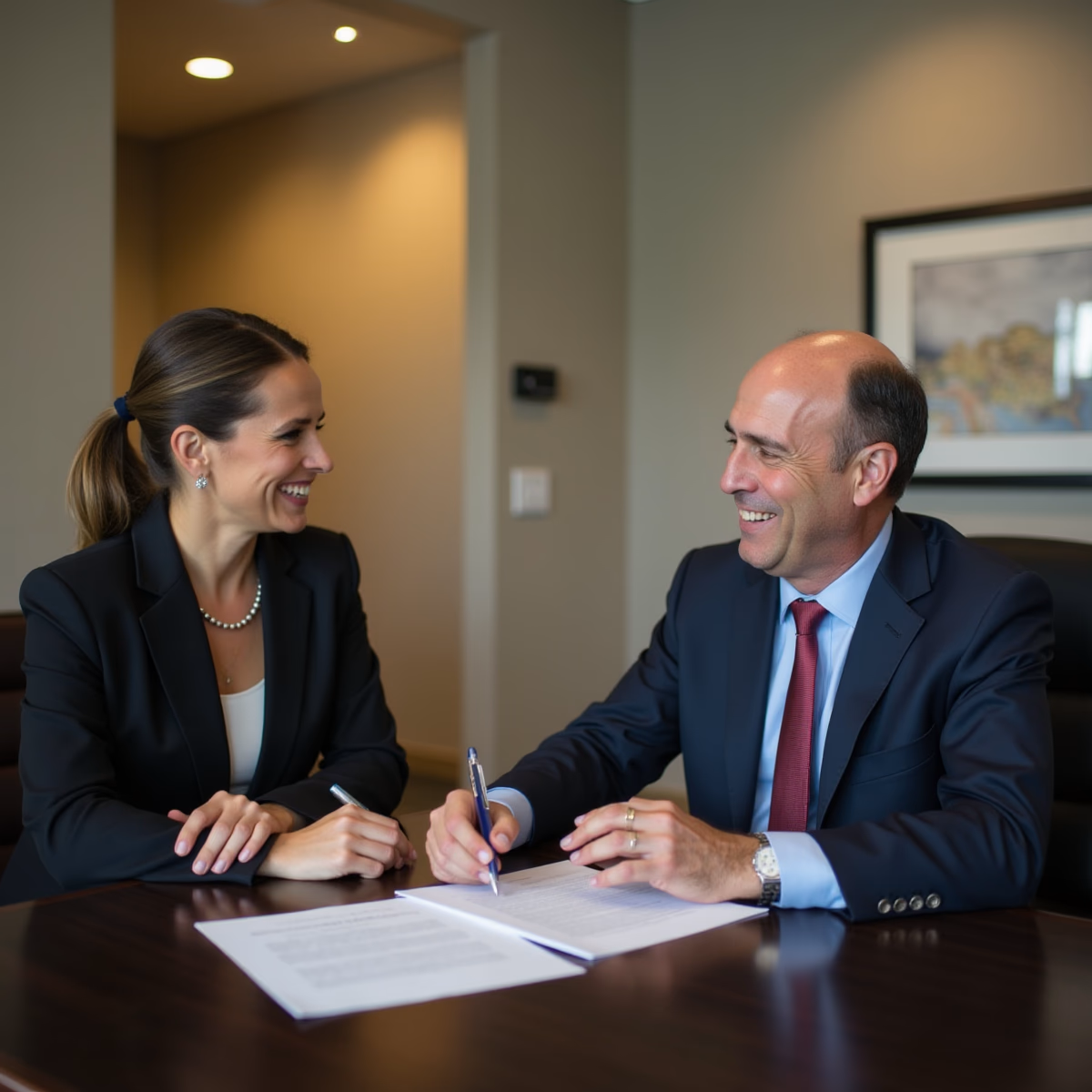
It’s a common misunderstanding. Executors are primarily responsible for paying the debts of the estate, not for proactively seeking money owed to it. However, you absolutely have the power – and often the duty – to pursue claims on behalf of the estate. Think of it like this: the estate is a separate legal entity, and you, as executor, are its representative. If someone wronged your mother (or the estate), you can step into her shoes and seek redress. This could take the form of a demand letter, mediation, or even a full-blown lawsuit.
The key is documenting everything. Just like you’d meticulously record expenses paid from the estate, you need to document all income received by the estate. This includes any judgments, settlements, or recovered funds.
What Types of Claims Can an Executor Pursue?
The possibilities are surprisingly broad. Here are a few examples:
-
Outstanding Loans: If your mother loaned money to someone, the estate is entitled to repayment.
Unpaid Invoices: Did a customer owe your mother money for services rendered? You can pursue that debt.
Insurance Claims: Untouched life insurance policies, property damage claims, or even medical overpayments can result in funds coming into the estate.
Fraud or Theft: If your mother was the victim of fraud or theft, you can sue to recover the stolen assets.
Breach of Contract: Emily’s situation is a classic example. If a contractor failed to fulfill their obligations, the estate can seek damages.
Remember, it’s not always about large sums. Even smaller claims can add up, particularly in larger estates. Don’t dismiss anything as insignificant without investigating.
How Does Filing a Claim Against Someone Affect the Estate’s Creditors?
This is where things get complex. Filing a claim against another party doesn’t automatically mean that money will be available to pay the estate’s creditors. You’re essentially entering a waiting game. If you win your claim, those funds will then become part of the estate’s assets and distributed according to the probate hierarchy.
However, Probate Code § 11420 dictates that debts are not paid first-come, first-served. They follow a strict hierarchy: (1) Administration expenses, (2) Funeral costs, (3) Medical/Last Illness, (4) Family Allowance, (5) Wage Claims, and finally (7) General Debts (credit cards). Executors who pay low-priority debts first can be personally liable. So, even if you recover a significant sum, it might be used to satisfy higher-priority claims before reaching your mother’s credit card debt, for example.
What About the Statute of Limitations?
This is critical. Just because the estate is open doesn’t mean you have unlimited time to file claims. For debts owed to the estate, the same statute of limitations rules generally apply as if your mother were still alive. You need to act promptly. However, claims against the estate have a much tighter window. Probate Code § 9100 states that creditors have a strict window to file a claim: either 4 months after Letters are issued or 60 days after notice is mailed (whichever is later). Once this period expires, unfiled claims are generally forever barred, protecting the heirs.
The CPA Advantage: Uncovering Hidden Assets & Maximizing Recovery
As an Estate Planning Attorney and CPA with over 35 years of experience, I always emphasize the value of a thorough asset search. Often, debts owed to the estate are overlooked—life insurance policies beneficiaries forgot about, accounts receivable from a small business, or even outstanding tax refunds. My dual background allows me to perform a comprehensive review, ensuring we capture every possible asset. Furthermore, understanding the tax implications of these recovered funds—specifically, the potential for a step-up in basis—is crucial for minimizing capital gains taxes for the beneficiaries. Accurate valuation is also essential, preventing future disputes with the IRS or other creditors.
Don’t try to navigate this alone. The probate process is complex, and even a seemingly simple claim can quickly become a legal battle. Consult with an experienced attorney to protect the estate and ensure your loved one’s wishes are carried out.
What causes California probate cases to spiral into delay, disputes, and extra cost?
Success in probate court depends less on the size of the estate and more on the accuracy of the petition and the behavior of the fiduciary. Whether the issue is a forgotten asset, a contested creditor claim, or a disagreement among siblings, understanding the procedural triggers for court intervention is the best defense against prolonged administration.
| Legal Foundation | Why It Matters |
|---|---|
| The Court | See the role of the probate court. |
| Statutes | Review probate legal rules. |
| Legal Basis | Check legal authority in probate. |
A stable probate administration outcome usually follows from clarity, consistency, and readiness for court review, especially when multiple stakeholders and competing interpretations are involved. When documentation supports enforcement and timelines are respected, families are less likely to face preventable escalation.
Verified Authority on Probate Creditor Claims
-
The Creditor Window (4-Month Rule): California Probate Code § 9100
This statute provides the primary protection for the estate. Generally, any creditor who fails to file a formal claim within four months of the executor receiving Letters is barred from collecting. This “clean break” is one of the main advantages of formal probate. -
Mandatory Notice to Public Agencies: California Probate Code § 9202
Regular creditors aren’t the only concern. You MUST send specific notices to the Director of Health Care Services (Medi-Cal), the Franchise Tax Board, and the Victim Compensation Board. Missing this step keeps the liability window open indefinitely for the state. -
Priority of Payments: California Probate Code § 11420 (Debt Hierarchy)
If an estate is “insolvent” (debts exceed assets), you cannot simply pay bills as they arrive. This code establishes the strict pecking order: funeral expenses and administration costs (lawyer/executor fees) get paid before credit cards and medical bills. -
Rejection of Claim (The “Sue or Lose It” Rule): California Probate Code § 9353
When an executor formally rejects a claim (Form DE-174), the clock starts ticking. The creditor has exactly 90 days to file a civil lawsuit to enforce the debt. If they miss this deadline, the claim is barred, regardless of its validity. -
Personal Liability of Executor: California Probate Code § 9601
An executor can be held personally liable for “breach of fiduciary duty” if they pay debts out of order (e.g., paying a credit card before the funeral home) or distribute assets to heirs before clearing all valid creditor claims. -
One-Year Statute of Limitations (Non-Probate): California Code of Civil Procedure § 366.2
This is the ultimate backstop. Even if no probate is opened, creditors generally only have one year from the date of death to file a lawsuit against the decedent’s successors (e.g., trust beneficiaries). After one year, most debts expire automatically.
Attorney Advertising, Legal Disclosure & Authorship
ATTORNEY ADVERTISING. This content is provided for general informational and educational purposes only and does not constitute legal, financial, or tax advice. Under the California Rules of Professional Conduct and State Bar advertising regulations, this material may be considered attorney advertising. Reading this content does not create an attorney-client relationship or any professional advisory relationship. Laws vary by jurisdiction and are subject to change, including recent 2026 developments under California’s AB 2016 and evolving federal estate and reporting requirements. You should consult a qualified attorney or advisor regarding your specific circumstances before taking action.
Responsible Attorney: Steven F. Bliss, California Attorney (Bar No. 147856).
Local Office:
The Law Firm of Steven F. Bliss Esq.43920 Margarita Rd Ste F Temecula, CA 92592 (951) 223-7000
The Law Firm of Steven F. Bliss Esq. is a practice location and trade name used by Steven F. Bliss, Esq., a California-licensed attorney.
About the Author & Legal Review Process
This article was researched and drafted by the Legal Editorial Team of the Law Firm of Steven F. Bliss, Esq., a collective of attorneys, legal writers, and paralegals dedicated to translating complex legal concepts into clear, accurate guidance.
Legal Review: This content was reviewed and approved by Steven F. Bliss, a California-licensed attorney (Bar No. 147856). Mr. Bliss concentrates his practice in estate planning and estate administration, advising clients on proactive planning strategies and representing fiduciaries in probate and trust administration proceedings when formal court involvement becomes necessary.
With more than 35 years of experience in California estate planning and estate administration, Mr. Bliss focuses on structuring enforceable estate plans, guiding fiduciaries through court-supervised proceedings, resolving creditor and notice issues, and coordinating asset management to support compliant, timely distributions and reduce fiduciary risk. |