|
Legal & Tax Disclosure
ATTORNEY ADVERTISING.
This article is provided for general informational purposes only and does not constitute legal, financial, or tax advice. Reading this content does not create an attorney-client or professional advisory relationship. Laws vary by jurisdiction and are subject to change. You should consult a qualified professional regarding your specific circumstances. |
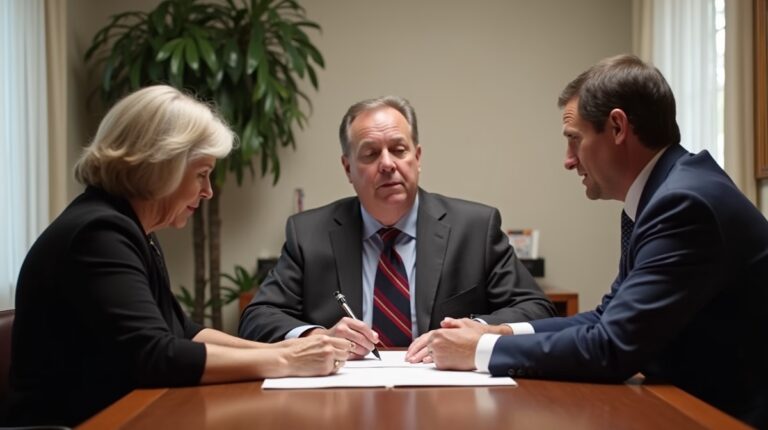
Emily just received Letters Testamentary, naming her executor of her mother’s estate. She’s eager to sell the house in Temecula to help fund her mother’s assisted living costs, but her cousin warned her about needing “court confirmation” before the sale. Emily wants to know if she can simply list the property with a realtor and proceed like a normal sale, or if that’s a mistake that could expose her to personal liability. The potential cost of delaying the sale—and losing a buyer—is significant.
As an estate planning attorney and CPA with over 35 years of experience here in Temecula, I understand Emily’s frustration. Navigating the probate process while simultaneously trying to manage an estate’s assets is stressful, and the rules surrounding the sale of real property are often misunderstood. Whether or not court confirmation is required depends entirely on the type of authority granted to Emily as executor.
What’s the Difference Between Full and Limited Authority?

California Probate Code distinguishes between “Full Authority” and “Limited Authority” for executors (Probate Code § 10400). When Letters Testamentary are issued, the court will specify which type of authority has been granted. This is critical information.
With Full Authority, an executor can sell real estate without a court hearing. With Limited Authority, the sale MUST be confirmed by the judge in an open court ‘overbid’ process, which adds significant time and expense. The ‘overbid’ process, while intended to protect beneficiaries, often attracts professional bidders whose sole purpose is to drive up the bidding, costing the estate money.
Emily needs to carefully review her Letters Testamentary to determine which type of authority she possesses. If it states “Full Authority,” she’s likely in the clear to proceed with a standard real estate transaction. But if it’s “Limited Authority,” she must initiate the court confirmation process before accepting any offers. Failing to do so can expose her to personal liability for any loss the estate incurs due to a flawed sale.
What if the Letters Don’t Specify?
It’s surprisingly common for Letters Testamentary to be silent on the issue of authority type. In that case, the executor is automatically deemed to have Limited Authority. This is a legal default intended to provide maximum protection to the estate. So, even if Emily assumes she has full authority because she hasn’t heard otherwise, she’s operating under a dangerous misconception.
How Does the Court Confirmation Process Work?
The process starts with filing a Petition for Confirmation of Sale with the probate court. This petition requires detailed information about the property, the proposed sale price, and the terms of the agreement. A hearing is then scheduled, and all interested parties (heirs, beneficiaries, creditors) are given notice.
At the hearing, the judge will review the petition and consider any objections. If there are no valid objections, the judge will confirm the sale, and Emily can proceed with closing the transaction. However, as mentioned earlier, the open ‘overbid’ process can often result in a higher final price than originally anticipated—or even drive away qualified buyers.
What About Executor Fees?
California law sets a mandatory Statutory Fee Schedule based on the gross value of the estate (not the net equity) (Probate Code § 10800). For example, the fee is 4% of the first $100k, 3% of the next $100k, and 2% of the next $800k. This is a right, not a salary, and is taxable income. As a CPA, I often advise executors to meticulously document all time and expenses incurred during the probate process, as these are also reimbursable from the estate.
What if Creditors Come After the Sale?
Creditors have a strict window to file claims—typically 4 months after Letters are issued (Probate Code § 9100). If a creditor fails to file within this window (and proper notice was given), their debt is generally extinguished forever. It’s vital to ensure proper notification is sent to all known creditors, as any overlooked claims could become Emily’s personal responsibility if the estate’s assets are depleted.
How Long Does Probate Actually Take?
A probate case cannot be closed in less than roughly 7 to 9 months due to mandatory notice periods (15 days for initial hearing + 4 months for creditors), but most California probates in 2026 take 12 to 18 months due to court congestion. It’s also important to remember that the court-appointed Probate Referee—not a private appraiser—is required to value non-cash assets (like real estate and stocks) at a fee of 0.1% of the assets appraised.
How do enforcement rules in California probate court shape outcomes for heirs and fiduciaries?
The path through California probate is rarely a straight line; it requires precise adherence to statutory deadlines, accurate asset characterization, and strict fiduciary compliance. Without a clear roadmap, what begins as a standard administrative proceeding can quickly dissolve into a costly battle over interpretation, valuation, and beneficiary rights.
- Appearances: Prepare for the court hearing in probate.
- Steps: Follow strict probate procedure requirements.
- Organization: Maintain managing a probate case logs.
California probate is most manageable when authority is documented early, assets are classified correctly, and procedure is followed consistently from petition through closing. When the process is approached with realistic expectations about notice, claims, accounting, and dispute risk, the estate is more likely to move toward closure without avoidable conflict or delay.
Verified Authority on California Probate Administration
-
Executor Powers (The IAEA): California Probate Code § 10400 (Independent Administration)
The Independent Administration of Estates Act (IAEA) is the engine of a modern probate. It allows personal representatives with “Full Authority” to sell real estate and pay bills without constant court approval. Without IAEA authority, every major action requires a separate court petition and order. -
Statutory Executor Fees: California Probate Code § 10800 (Compensation)
Executor fees in California are not arbitrary. They are calculated on the gross value of the probate estate: 4% of the first $100k, 3% of the next $100k, 2% of the next $800k, and 1% of the next $9 million. This often surprises heirs when the estate has high asset value but high debt (low equity). -
Creditor Claim Deadlines: California Probate Code § 9100 (Statute of Limitations)
The primary benefit of formal probate is the “clean break” from debts. Creditors generally have four months from the issuance of Letters to file a formal claim. If they miss this deadline, the debt is usually legally unenforceable against the estate or the heirs. -
Probate Value Threshold ($208,850): California Probate Code § 13100 (Small Estate Limit)
Effective April 1, 2025, estates valued under $208,850 may qualify for summary procedures (like a Small Estate Affidavit) instead of formal probate. Note that this limit is adjusted for inflation every three years. -
Mandatory Publication: California Probate Code § 8120 (Notice to Creditors)
Before the court can appoint an executor, a Notice of Petition to Administer Estate must be published in a newspaper of general circulation in the city where the decedent resided. This publication serves as constructive notice to unknown creditors and potential heirs. -
The Probate Referee: California Probate Code § 8900 (Appraisal)
You cannot simply guess the value of the estate’s assets. The court appoints a neutral Probate Referee to appraise all non-cash assets (real estate, stocks, business interests). Their appraisal is required before the estate can be distributed or closed.
|
Attorney Advertising, Legal Disclosure & Authorship
ATTORNEY ADVERTISING.
This content is provided for general informational and educational purposes only and does not constitute legal, financial, or tax advice. Under the California Rules of Professional Conduct and State Bar advertising regulations, this material may be considered attorney advertising. Reading this content does not create an attorney-client relationship or any professional advisory relationship. Laws vary by jurisdiction and are subject to change, including recent 2026 developments under California’s AB 2016 and evolving federal estate and reporting requirements. You should consult a qualified attorney or advisor regarding your specific circumstances before taking action.
Responsible Attorney:
Steven F. Bliss, California Attorney (Bar No. 147856).
Local Office:
The Law Firm of Steven F. Bliss Esq.43920 Margarita Rd Ste F Temecula, CA 92592 (951) 223-7000
The Law Firm of Steven F. Bliss Esq. is a practice location and trade name used by Steven F. Bliss, Esq., a California-licensed attorney.
About the Author & Legal Review Process
This article was researched and drafted by the Legal Editorial Team of the Law Firm of Steven F. Bliss, Esq.,
a collective of attorneys, legal writers, and paralegals dedicated to translating complex legal concepts into clear, accurate guidance.
Legal Review:
This content was reviewed and approved by Steven F. Bliss, a California-licensed attorney (Bar No. 147856). Mr. Bliss concentrates his practice in estate planning and estate administration, advising clients on proactive planning strategies and representing fiduciaries in probate and trust administration proceedings when formal court involvement becomes necessary.
With more than 35 years of experience in California estate planning and estate administration,
Mr. Bliss focuses on structuring enforceable estate plans, guiding fiduciaries through court-supervised proceedings, resolving creditor and notice issues, and coordinating asset management to support compliant, timely distributions and reduce fiduciary risk. |