
|
Legal & Tax Disclosure
ATTORNEY ADVERTISING.
This article is provided for general informational purposes only and does not constitute legal, financial, or tax advice. Reading this content does not create an attorney-client or professional advisory relationship. Laws vary by jurisdiction and are subject to change. You should consult a qualified professional regarding your specific circumstances. |
Emily just received a stack of claims against her mother’s estate – bills, invoices, even a demand for payment from a debt collector she’s never heard of. She’s overwhelmed, unsure what’s legitimate, and terrified of inadvertently approving a fraudulent claim that will deplete the estate’s assets. This is a common scenario, and properly handling creditor claims is critical to fulfilling your fiduciary duty as Personal Representative.
What Happens When Creditors Contact You Directly?
As executor or administrator of an estate, you’ll inevitably receive notices of claims directly from creditors. They bypass the formal court process, hoping for a quicker resolution. Ignoring these is a mistake. While you aren’t required to respond to every initial notice, failing to do so can have negative consequences. Creditors may file a lawsuit against the estate, forcing you into costly and time-consuming litigation. It’s also important to understand that simply because a bill arrives doesn’t mean it’s valid. Your job is to investigate each claim and determine its legitimacy.
How Do I Properly Respond to a Claim?
The first step is acknowledging receipt of the claim. A simple letter stating you received their documentation and are reviewing it is sufficient. Avoid making any promises of payment at this stage. Next, you need to request supporting documentation. This includes the original bill, proof of service (if it’s a claim for professional services), and any evidence that the debt was outstanding at the time of death. Be specific about what you need; a generic request can lead to a deluge of irrelevant paperwork.
Remember Probate Code § 10580: if you have full authority under the Independent Administration of Estates Act (IAEA), you can take most actions without a court hearing, but you MUST mail a ‘Notice of Proposed Action’ to all interested parties 15 days before taking the action. This includes approving or rejecting claims. If no one objects, you are protected from future liability.
What if a Creditor Files a Formal Claim with the Court?
While some creditors contact you directly, others will file a formal “Proof of Claim” with the court. This initiates a more formal process. You’ll receive a copy of the claim, and you have a limited time to object. Failing to object within the statutory timeframe effectively constitutes an admission of validity.
What are Common Reasons to Object to a Claim?
There are numerous grounds for objecting to a claim. Common reasons include:
Lack of Documentation: The creditor hasn’t provided sufficient evidence to support their claim.
Debt Not Outstanding: The debt was already paid before death, or the statute of limitations has expired.
Fraudulent Claim: The claim is based on a debt that was incurred through fraud or misrepresentation.
Not an Estate Liability: The debt was a personal obligation of the deceased and not a liability of the estate (for example, a debt incurred after death).
Improperly Filed: The claim wasn’t filed correctly with the court, or it’s outside the statutory timeframe.
What if I Suspect Fraudulent Claims?
Fraudulent claims are unfortunately common. Be particularly vigilant regarding claims from unknown creditors or those with vague descriptions. If you suspect fraud, report it to the court and consider contacting law enforcement. Protecting the estate’s assets from fraudulent claims is a primary duty of the Personal Representative.
Keeping Meticulous Records is Essential
Throughout this process, maintain a detailed record of all claims received, correspondence sent, and actions taken. This documentation will be invaluable if you face a dispute or audit. A simple spreadsheet can suffice, but a more sophisticated estate administration software can streamline the process.
After 35+ years as both an Estate Planning Attorney and a Certified Public Accountant, I’ve seen firsthand how critical meticulous record-keeping is. As a CPA, I also understand the tax implications of estate debts. Properly documenting and validating claims ensures we can accurately calculate the estate’s final tax liability and maximize the step-up in basis for inherited assets, minimizing capital gains taxes for the beneficiaries. The interplay between legal and tax considerations is where I bring the most value to my clients.
What About Claims Received After the Estate is Closed?
Claims received after the estate is closed are generally barred. However, there are exceptions, particularly if you failed to provide proper notice to creditors. This is why adhering to the statutory notice requirements is so crucial.
What are the Time Limits for Filing Claims?
Creditors typically have four months from the date Letters Testamentary (or Letters of Administration) are issued to file a claim. However, the court can extend this deadline for good cause. Always check the court’s local rules for specific timeframes. Remember Probate Code § 8800: the Personal Representative must file the ‘Inventory and Appraisal’ within 4 months of receiving Letters. Failure to meet this deadline is a common reason for court appearances (OSC hearings) and potential removal.
What if the Estate Doesn’t Have Enough Assets to Pay All Claims?
If the estate’s assets are insufficient to cover all valid claims, you’ll need to prioritize payment according to the statutory order of priority. Certain claims, such as funeral expenses and taxes, have higher priority than others.
How do enforcement rules in California probate court shape outcomes for heirs and fiduciaries?
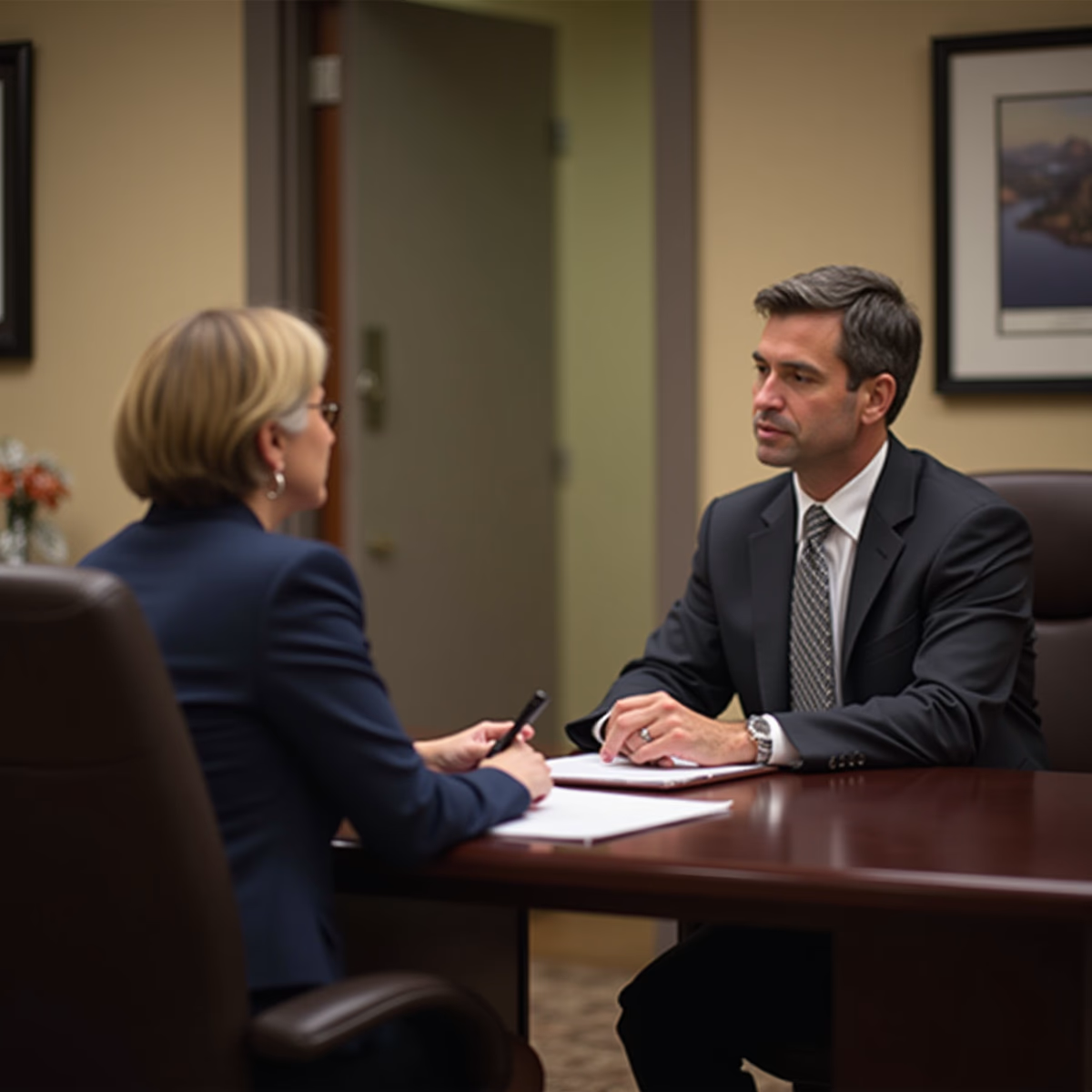
California probate is designed to provide court-supervised transfer of property, yet cases often break down when authority is unclear, required steps are missed, or disputes arise over assets, notice, and fiduciary conduct. When the process is misunderstood, families can face avoidable delay, escalating conflict, and increased exposure to creditor issues, hearings, or litigation before the estate can close.
| Final Stage | Factor |
|---|---|
| Wrap Up | Execute end-stage probate steps. |
| IRS/FTB | Address tax issues in probate. |
| Judgments | Review remedies and outcomes. |
California probate is most manageable when authority is documented early, assets are classified correctly, and procedure is followed consistently from petition through closing. When the process is approached with realistic expectations about notice, claims, accounting, and dispute risk, the estate is more likely to move toward closure without avoidable conflict or delay.
Verified Authority on Probate Case Management
-
Mandatory Closing Timeline: California Probate Code § 12200 (Time for Closing)
The clock starts ticking the day Letters are issued. You have 12 months to close the estate (or 18 months if filing a federal tax return). If you miss this deadline, you must file a Status Report of Administration to explain the delay to the judge, or face potential sanctions. -
Notice of Proposed Action (NOPA): California Probate Code § 10580 (IAEA Powers)
This is the executor’s most powerful case management tool. It allows you to sell cars, abandon worthless property, or compromise claims without a court hearing, provided you give beneficiaries 15 days’ notice and receive no written objections. -
Inventory & Appraisal: California Probate Code § 8800 (Filing Deadline)
Effective case management relies on knowing what you have. The law requires the Inventory and Appraisal to be filed within 4 months of appointment. This document lists every asset and its value as of the date of death, serving as the baseline for all accounting. -
Duty to Deposit Money: California Probate Code § 9700 (Estate Funds)
The Personal Representative has a strict fiduciary duty to keep estate cash safe. Funds must be deposited in insured accounts (banks or trust companies authorized in California). Keeping cash in a personal safe or a non-interest-bearing checking account for too long can result in a surcharge. -
Change of Address: California Rules of Court 2.200
A simple but critical management task. If the administrator, executor, or attorney changes their mailing address or email, they must file a Notice of Change of Address (Form MC-040) immediately. The court sends hearing notices by mail; “I didn’t get the letter” is not a valid defense in probate court. -
Duties & Liabilities Form: Judicial Council Form DE-147
Before Letters are issued, every personal representative must sign this form acknowledging they understand their duties. It serves as a permanent record that you were warned about commingling funds, tax deadlines, and the requirement to keep accurate records.
|
Attorney Advertising, Legal Disclosure & Authorship
ATTORNEY ADVERTISING.
This content is provided for general informational and educational purposes only and does not constitute legal, financial, or tax advice. Under the California Rules of Professional Conduct and State Bar advertising regulations, this material may be considered attorney advertising. Reading this content does not create an attorney-client relationship or any professional advisory relationship. Laws vary by jurisdiction and are subject to change, including recent 2026 developments under California’s AB 2016 and evolving federal estate and reporting requirements. You should consult a qualified attorney or advisor regarding your specific circumstances before taking action.
Responsible Attorney:
Steven F. Bliss, California Attorney (Bar No. 147856).
Local Office:
The Law Firm of Steven F. Bliss Esq.43920 Margarita Rd Ste F Temecula, CA 92592 (951) 223-7000
The Law Firm of Steven F. Bliss Esq. is a practice location and trade name used by Steven F. Bliss, Esq., a California-licensed attorney.
About the Author & Legal Review Process
This article was researched and drafted by the Legal Editorial Team of the Law Firm of Steven F. Bliss, Esq.,
a collective of attorneys, legal writers, and paralegals dedicated to translating complex legal concepts into clear, accurate guidance.
Legal Review:
This content was reviewed and approved by Steven F. Bliss, a California-licensed attorney (Bar No. 147856). Mr. Bliss concentrates his practice in estate planning and estate administration, advising clients on proactive planning strategies and representing fiduciaries in probate and trust administration proceedings when formal court involvement becomes necessary.
With more than 35 years of experience in California estate planning and estate administration,
Mr. Bliss focuses on structuring enforceable estate plans, guiding fiduciaries through court-supervised proceedings, resolving creditor and notice issues, and coordinating asset management to support compliant, timely distributions and reduce fiduciary risk. |