This article is provided for general informational purposes only and does not constitute legal, financial, or tax advice.
Reading this content does not create an attorney-client or professional advisory relationship.
Laws vary by jurisdiction and are subject to change. You should consult a qualified professional regarding your specific circumstances.
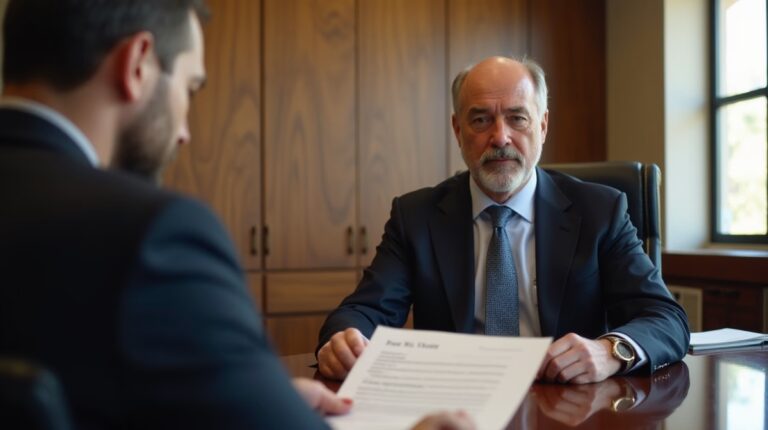
Kim called me in absolute distress last week. Her mother had recently passed, leaving a trust with Kim as successor trustee. A disgruntled cousin, believing the trust was unfair, immediately filed a petition challenging its validity and Kim’s appointment. Before Kim even had a chance to respond, the cousin sought – and obtained – a temporary restraining order freezing all trust assets and prohibiting Kim from taking any further action. Kim faced potential personal liability and mounting legal fees, all because she couldn’t move forward with administering the estate. The cost of inaction, or even delayed action, can be catastrophic.
What Happens When a Trust is Challenged in Court?

It’s a surprisingly common scenario: a beneficiary or other interested party disagrees with the terms of a trust, the actions of a trustee, or the very validity of the trust itself. When this happens, they can petition the court for relief. This often takes the form of a complaint for instructions or a petition to set aside the trust. Critically, that initial filing doesn’t automatically halt everything. A separate motion is required to ask the court to intervene immediately and prevent the trustee from acting.
Can a Court Actually Stop a Trustee From Administering the Trust?
Yes, absolutely. Courts have broad equitable powers – the ability to issue orders compelling or prohibiting actions – to protect the trust estate and its beneficiaries. A common request is for a temporary restraining order (TRO) or a preliminary injunction. These are temporary measures, designed to maintain the status quo until a full hearing can be held. The standard for obtaining a TRO is relatively low, requiring a showing of likely success on the merits and irreparable harm if action isn’t taken. A preliminary injunction requires a more substantial showing, including a demonstration of actual and imminent harm.
The court isn’t going to lightly freeze a trust. There has to be a credible threat of something going wrong. For example, if the challenger can show the trustee is likely dissipating assets or engaging in self-dealing, the court is more likely to grant a freeze. Conversely, if the challenge is based on a frivolous claim with no supporting evidence, the court will likely deny the request.
What Actions Might a Court Freeze?
The scope of a freeze can vary significantly. It could be limited to specific transactions – say, the sale of a particular property – or it could be a complete prohibition on all trustee actions. Common actions a court might freeze include:
- Distributions to Beneficiaries: This is perhaps the most common restriction. The court may prevent the trustee from making any payments to beneficiaries until the dispute is resolved.
- Sale of Assets: If there’s a concern the trustee will sell assets at a below-market price or otherwise mismanage them, the court can prohibit sales.
- Investment Decisions: The court might freeze any new investments or changes to existing portfolios.
- Exercise of Trustee Powers: This could include anything from hiring professionals to pursuing legal claims on behalf of the trust.
It’s essential to understand that even with a freeze in place, certain actions might still be allowed – such as preserving the assets or paying essential bills. The court order will clearly define the scope of the restriction.
What Happens If a Trustee Violates a Court Order?
Let’s be blunt: violating a court order is a very serious matter. It can result in sanctions, fines, and even contempt of court. For a trustee, it can lead to removal from their position and personal liability for any resulting damages. The court isn’t simply going to ignore a violation.
How Can a Trustee Protect Themselves From a Freeze?
Proactive planning is key. First, ensure the trust documents are clearly drafted and unambiguous, especially regarding successor trustees and asset distribution. Ambiguous language, while Settlor Intent (Probate Code § 21102) is theoretically honored, invites litigation. Second, meticulously document all trustee actions, including investment decisions, distributions, and communications with beneficiaries. Failure to provide annual accountings or maintain accurate records as mandated by Probate Code §§ 16060–16069 can result in a court-imposed surcharge—making the trustee personally liable for missing funds or losses.
Third, be aware of the potential for challenges and have a legal strategy in place. If a beneficiary expresses dissatisfaction, address their concerns promptly and transparently. It’s often possible to resolve disputes informally before they escalate to litigation. Finally, if you receive notice of a petition seeking a freeze, immediately consult with an experienced trust attorney. Time is of the essence.
What About Trusts That Haven’t Been Funded Properly?
This is a common mistake I see. A beautifully drafted trust document is worthless if it doesn’t actually own anything. Under California Probate Code § 15200, a trust exists only when identifiable property is transferred into it; an unfunded trust is a ‘shell’ that fails to bypass probate, regardless of how well the documents are drafted. A challenger can easily argue that an unfunded trust isn’t subject to the court’s jurisdiction, rendering any attempt to freeze assets moot.
What If the Successor Trustee is Incapacitated or Unwilling to Act?
This is where having named backup fiduciaries is crucial. Without them, Probate Code § 15660 allows the court to appoint a public fiduciary, which can delay estate management by months and incur significant unnecessary fees.
I’ve been practicing estate planning and probate law for over 35 years, and I’ve also been a Certified Public Accountant for nearly as long. This unique combination allows me to not only draft robust trust documents but also to understand the tax implications of trustee actions – particularly the crucial step-up in basis available for inherited assets, which can significantly reduce capital gains taxes. Proper valuation of those assets is also essential. I’ve seen too many trusts needlessly burdened by tax liabilities simply because the trustee didn’t understand the financial consequences of their decisions.
What separates a successful California trust distribution from a costly battle over interpretation and accounting?
Success in trust administration depends on more than just the document; it requires active management of assets, precise accounting to beneficiaries, and careful navigation of tax rules. Whether dealing with a blended family or complex real estate, understanding the mechanics of trust law is the only way to ensure the grantor’s wishes survive scrutiny.
- Protection: Review asset privacy options.
- Detail: Check probate-trust hybrids.
- Growth: Manage dynasty trust.
Ultimately, the success of a trust depends on the details—proper funding, clear terms, and a trustee willing to follow the rules. By anticipating friction points and documenting every step of the administration, fiduciaries can protect the estate and themselves from liability.
Verified Authority on California Trust Pitfalls & Maintenance
-
Trust Funding Verification: California Probate Code § 15200 (Asset Transfer)
The primary statute confirming that a trust requires property to be valid. Use this to verify that your real estate deeds and bank accounts have been correctly retitled to the trust’s name. -
Real Estate Succession (AB 2016): California Probate Code § 13151 (Petition for Succession)
Specific guidance for the 2025/2026 process. It outlines how a primary residence worth $750,000 or less can be transferred via a court-approved Petition rather than a full probate. -
Trustee Duty to Account: California Probate Code § 16062 (Annual Reporting)
Trustees must provide an annual report to beneficiaries. Failure to do so is one of the top triggers for trust litigation in California. -
Digital Legacy (RUFADAA): California Probate Code § 870 (Digital Assets)
The authoritative resource on the Revised Uniform Fiduciary Access to Digital Assets Act. It explains why your trust must explicitly grant access to digital records and cryptocurrency. -
Successor Trustee Appointment: California Probate Code § 15660 (Vacancy in Trustee)
Outlines what happens when a trust lacks a successor. This resource highlights the importance of naming multiple backup fiduciaries to avoid court-appointed public administrators. -
Small Estate Personal Property: California Probate Code § 13100 (Affidavits)
Statutory limits for the $208,850 threshold (effective April 1, 2025). Use this for non-real estate assets like bank accounts and vehicles that were accidentally left out of the trust.
|
Attorney Advertising, Legal Disclosure & Authorship
ATTORNEY ADVERTISING.
This content is provided for general informational and educational purposes only and does not constitute legal, financial, or tax advice. Under the California Rules of Professional Conduct and State Bar advertising regulations, this material may be considered attorney advertising. Reading this content does not create an attorney-client relationship or any professional advisory relationship. Laws vary by jurisdiction and are subject to change, including recent 2026 developments under California’s AB 2016 and evolving federal estate and reporting requirements. You should consult a qualified attorney or advisor regarding your specific circumstances before taking action.
Responsible Attorney:
Steven F. Bliss, California Attorney (Bar No. 147856).
Local Office:
The Law Firm of Steven F. Bliss Esq.43920 Margarita Rd Ste F Temecula, CA 92592 (951) 223-7000
The Law Firm of Steven F. Bliss Esq. is a practice location and trade name used by Steven F. Bliss, Esq., a California-licensed attorney.
About the Author & Legal Review Process
This article was researched and drafted by the Legal Editorial Team of the Law Firm of Steven F. Bliss, Esq.,
a collective of attorneys, legal writers, and paralegals dedicated to translating complex legal concepts into clear, accurate guidance.
Legal Review:
This content was reviewed and approved by Steven F. Bliss, a California-licensed attorney (Bar No. 147856). Mr. Bliss concentrates his practice in estate planning and estate administration, advising clients on proactive planning strategies and representing fiduciaries in probate and trust administration proceedings when formal court involvement becomes necessary.
With more than 35 years of experience in California estate planning and estate administration,
Mr. Bliss focuses on structuring enforceable estate plans, guiding fiduciaries through court-supervised proceedings, resolving creditor and notice issues, and coordinating asset management to support compliant, timely distributions and reduce fiduciary risk. |