This article is provided for general informational purposes only and does not constitute legal, financial, or tax advice.
Reading this content does not create an attorney-client or professional advisory relationship.
Laws vary by jurisdiction and are subject to change. You should consult a qualified professional regarding your specific circumstances.
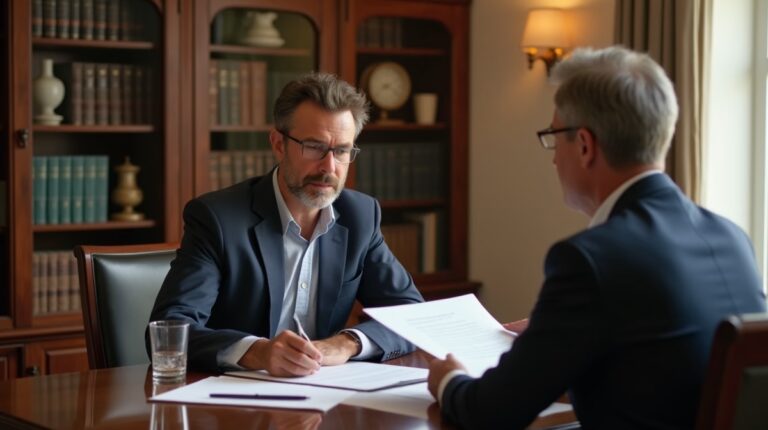
Floyd received a frantic call from his daughter last week. His mother, Emily, had passed away, and the trust—carefully drafted years ago—contained a seemingly innocuous clause naming a “Trust Protector.” Now, the co-trustees are locked in a dispute over a minor interpretation of the document, and Emily’s wishes are being obscured by legal maneuvering. Floyd estimates the cost of resolving this deadlock will exceed $15,000 in attorney’s fees, simply to get the trust back on track. He wishes they’d considered a mechanism for resolving these disputes before his mother’s death.
It’s a common oversight: naming a Trust Protector during the initial drafting of a trust, but failing to consider how—or if—that role continues during the administration of the trust. Many clients view the Trust Protector as a “break glass in case of emergency” provision, a failsafe for unforeseen circumstances. But relying on a Protector only when a crisis hits can be problematic. A proactive approach, clearly defining the Protector’s ongoing duties and authority during administration, is crucial for a smoothly functioning trust.
What powers should a Trust Protector have during trust administration?

The scope of a Trust Protector’s powers is entirely customizable, but several key areas are particularly valuable during administration. These include the ability to interpret ambiguous trust terms, modify administrative provisions (without altering core beneficiaries or distributions), remove and replace trustees, and even amend the trust to address changes in tax law or beneficiary circumstances. However, broad, undefined powers can be just as detrimental as a lack of authority. The Protector’s role must be carefully balanced to avoid undermining the trustees’ discretion or creating conflicts of interest.
Can a Trust Protector override the Trustees’ decisions?
Generally, a Trust Protector should not unilaterally override trustee decisions. Instead, the trust document should establish a clear process for consulting with the trustees and resolving disagreements. This might involve a mandatory mediation period, a designated decision-making framework (e.g., a majority vote between the Protector and trustees), or a specific standard for the Protector to exercise their powers (e.g., “substantial and material conflict” or “clear deviation from the Settlor’s intent”). The goal isn’t to create another decision-maker, but rather a safeguard against deadlock or mismanagement.
What happens if the named Trust Protector is unwilling or unable to serve?
This is where many trust documents fall short. Naming a successor Trust Protector—or establishing a clear process for appointing one—is essential. The trust should specify criteria for selecting a successor, such as a qualified attorney, accountant, or a trusted family friend with relevant expertise. It’s also prudent to include a waiver of compensation clause to prevent the successor Protector from seeking excessive fees. Without a designated successor, resolving a vacancy can require court intervention, significantly delaying administration and increasing costs.
As an estate planning attorney and CPA with over 35 years of experience, I’ve seen firsthand how a well-defined Trust Protector role can prevent disputes and ensure a trust operates as intended. My CPA background is particularly valuable because it allows me to anticipate and address the tax implications of trust amendments and distributions, maximizing the benefits of the step-up in basis for inherited assets and minimizing potential capital gains liabilities. A proactive approach to trust administration, including a carefully crafted Trust Protector provision, is a small investment that can yield significant returns in terms of peace of mind and preserved assets.
What if the trust doesn’t address Statutory Notification requirements?
If the trust is silent on the required notices after death, the trustee must adhere to the statutory rules. Probate Code § 16061.7 dictates that within 60 days of the settlor’s death, the trustee must serve the ‘Notification by Trustee’ to all heirs and beneficiaries; this triggers the 120-day statute of limitations for contesting the trust, which is the trustee’s primary shield against future litigation.
How does Prop 19 affect real estate held in trust?
Before distributing a parent’s home to a child, the trustee must verify if the child intends to make it their primary residence within one year. Failure to file the proper exclusion claim forms will trigger a property tax reassessment to current market value, potentially forcing a sale. Prop 19 requires careful planning to avoid unexpected tax consequences.
What do I do if assets were unintentionally excluded from the trust?
For deaths on or after April 1, 2025, if a primary residence intended for the trust was legally left out (valued up to $750,000), the trustee can use a ‘Petition for Succession’ under AB 2016 (Probate Code § 13151) instead of a full probate. Remember, this is a Petition (Judge’s Order), not an Affidavit. The Small Estate Affidavit has different requirements.
Is the trustee required to provide an accounting to beneficiaries?
Probate Code § 16062 states that trustees are legally mandated to provide a formal accounting to beneficiaries at least annually and at the termination of the trust; waiving this requirement in the trust document does not always protect the trustee if a beneficiary demands a report.
What are the implications of the OBBBA for large estates?
Effective Jan 1, 2026, the OBBBA permanently set the Federal Estate Tax Exemption to $15 million per person. Trustees must determine if the estate exceeds this threshold (taking into account portability) before closing administration.
What determines whether a California trust settlement remains private or erupts into public litigation?
Success in trust administration depends on more than just the document; it requires active management of assets, precise accounting to beneficiaries, and careful navigation of tax rules. Whether dealing with a blended family or complex real estate, understanding the mechanics of trust law is the only way to ensure the grantor’s wishes survive scrutiny.
- Protection: Review blind trusts.
- Detail: Check testamentary trusts.
- Wealth: Manage dynasty trust.
A stable trust administration relies on the trustee’s ability to balance investment duties, beneficiary communication, and tax compliance. When these elements are managed proactively, families can avoid the emotional and financial drain of litigation.
Verified Authority on California Trust Administration
-
Mandatory Notification (Probate Code § 16061.7): California Probate Code § 16061.7
The first critical step in administration. This statute requires the trustee to notify all heirs and beneficiaries within 60 days of death. It starts the 120-day clock for any contests, limiting the trustee’s liability. -
Trustee’s Duty to Account (Probate Code § 16062): California Probate Code § 16062
Defines the requirement for annual and final accountings. Trustees must report all receipts, disbursements, and changes in asset value to beneficiaries to ensure transparency and avoid surcharges. -
Primary Residence Succession (AB 2016): California Probate Code § 13151 (Petition for Succession)
Effective April 1, 2025, this statute is a “rescue” tool for administration. If a home (up to $750,000) was left out of the trust, the trustee can petition for this order rather than opening a full probate. -
Property Tax Reassessment (Prop 19): California State Board of Equalization (Prop 19)
Trustees must understand these rules before signing a deed to a beneficiary. Distributing real estate without filing the Parent-Child Exclusion claim can accidentally double or triple the property taxes for the heirs. -
Federal Estate Tax Exemption: IRS Estate Tax Guidelines
Reflects the permanent increase to a $15 million per person exemption (effective Jan 1, 2026). Trustees must evaluate if an IRS Form 706 is necessary to preserve “portability” of the unused exemption for a surviving spouse. -
Digital Asset Access (RUFADAA): California Probate Code § 870 (RUFADAA)
Without explicit authority under this statute, a trustee may be blocked from accessing the decedent’s online banking, email, or cryptocurrency accounts, stalling the administration process.
Attorney Advertising, Legal Disclosure & Authorship
ATTORNEY ADVERTISING. This content is provided for general informational and educational purposes only and does not constitute legal, financial, or tax advice. Under the California Rules of Professional Conduct and State Bar advertising regulations, this material may be considered attorney advertising. Reading this content does not create an attorney-client relationship or any professional advisory relationship. Laws vary by jurisdiction and are subject to change, including recent 2026 developments under California’s AB 2016 and evolving federal estate and reporting requirements. You should consult a qualified attorney or advisor regarding your specific circumstances before taking action.
Responsible Attorney: Steven F. Bliss, California Attorney (Bar No. 147856).
Local Office:
The Law Firm of Steven F. Bliss Esq.43920 Margarita Rd Ste F Temecula, CA 92592 (951) 223-7000
The Law Firm of Steven F. Bliss Esq. is a practice location and trade name used by Steven F. Bliss, Esq., a California-licensed attorney.
About the Author & Legal Review Process
This article was researched and drafted by the Legal Editorial Team of the Law Firm of Steven F. Bliss, Esq., a collective of attorneys, legal writers, and paralegals dedicated to translating complex legal concepts into clear, accurate guidance.
Legal Review: This content was reviewed and approved by Steven F. Bliss, a California-licensed attorney (Bar No. 147856). Mr. Bliss concentrates his practice in estate planning and estate administration, advising clients on proactive planning strategies and representing fiduciaries in probate and trust administration proceedings when formal court involvement becomes necessary.
With more than 35 years of experience in California estate planning and estate administration, Mr. Bliss focuses on structuring enforceable estate plans, guiding fiduciaries through court-supervised proceedings, resolving creditor and notice issues, and coordinating asset management to support compliant, timely distributions and reduce fiduciary risk. |