|
Legal & Tax Disclosure
ATTORNEY ADVERTISING.
This article is provided for general informational purposes only and does not constitute legal, financial, or tax advice. Reading this content does not create an attorney-client or professional advisory relationship. Laws vary by jurisdiction and are subject to change. You should consult a qualified professional regarding your specific circumstances. |
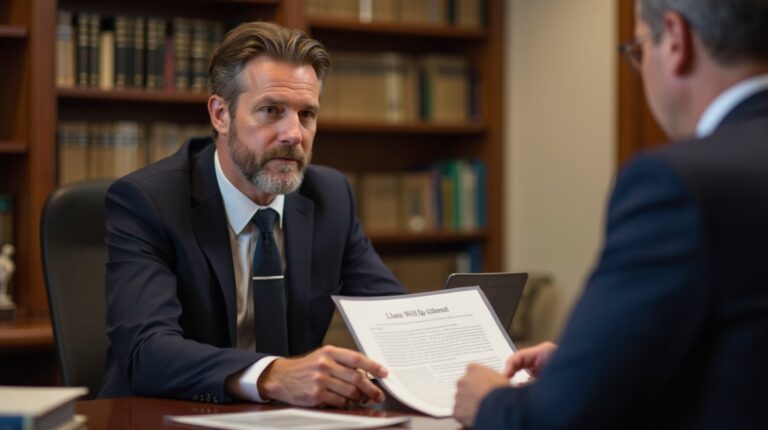
David called me last week, panicked. He’d drafted a Revocable Living Trust in 2015, fully intending to fund it, but life got in the way. Now, with his wife recently diagnosed with a serious illness, he’s scrambling to get everything done, worried his estate will be decimated by taxes. He’d heard about changes to the estate tax exemption and was convinced he needed to immediately execute a codicil. He hadn’t, and the original document was…misplaced. The cost of rebuilding that plan, plus the looming uncertainty, was causing him immense stress.
Why the 2026 Estate Tax Exemption Matters for California Residents

For high-net-worth individuals and families in Temecula, the federal estate tax exemption increase scheduled for 2026 is not just important – it’s potentially transformative. Understanding this change, and how it interacts with California’s unique estate planning landscape, is crucial. Currently, the federal estate tax exemption is around $13.61 million per individual (for 2024). However, this number is slated to revert to approximately $7.12 million in 2026 unless Congress acts. This “sunset” provision, created by the Tax Cuts and Jobs Act of 2017, has generated significant concern and planning opportunities.
How the OBBBA Impacts Bypass Trusts
Fortunately, the 2026 ‘Sunset’ was averted by the OBBBA (One Big Beautiful Bill Act), which permanently increased the Federal Estate Tax Exemption to $15 million per person effective Jan 1, 2026, directly impacting how high-value Bypass-Trusts are shielded from taxation. This means a properly structured Bypass-Trust, designed to utilize the full exemption amount, can continue to protect substantial wealth from federal estate taxes. For clients with estates exceeding the exemption level, a Bypass-Trust becomes absolutely essential. It’s a core strategy for minimizing tax liability and ensuring future generations inherit the maximum possible value.
California Considerations: No State Estate Tax, But…
California doesn’t have a state estate tax, which simplifies things considerably. However, that doesn’t mean wealthy Californians are immune to estate tax concerns. The federal estate tax remains a significant factor, and planning to utilize the federal exemption is vital. Furthermore, the impact of Proposition 19 on property taxes must be considered. Under Prop 19, heirs can only keep a parent’s low property tax base if they move into the home as their primary residence within one year and the home’s value is within specific limits; this is vital to understand when assets are distributed from a Bypass-Trust.
The CPA Advantage: Stepping Up Basis and Valuation
As an attorney and a CPA with over 35 years of experience, I bring a unique perspective to estate planning. My accounting background allows me to focus not just on avoiding taxes, but also on maximizing the ‘step-up in basis’ for inherited assets. This can significantly reduce capital gains taxes when heirs eventually sell those assets. Properly valuing assets, especially business interests and real estate, is also critical. I’ve seen too many estates suffer from inadequate valuations, leading to penalties and disputes with the IRS.
Business Interests and the FinCEN 2025 Exemption
Many of my Temecula clients are entrepreneurs or business owners. For those with LLCs or other business entities, it’s essential to understand the BOI reporting requirements under the Corporate Transparency Act. While the FinCEN 2025 Exemption now provides some relief for domestic LLCs, trustees or executors managing foreign-registered entities must still file updates within 30 days to avoid fines of $500/day. Ignoring these rules can lead to significant financial penalties.
Digital Assets and RUFADAA Compliance
In today’s digital world, it’s crucial to address the management of digital assets – cryptocurrency, online accounts, and digital property. Without specific RUFADAA language (Probate Code § 870) in your Bypass-Trust or Will, service providers like Coinbase and Google can legally deny your trustee access to your digital assets. This can leave those assets inaccessible or lost.
The Small Estate Threshold and Beyond
It’s important to remember that even with a Bypass-Trust, the overall value of the estate still matters. If combined ‘probate assets’ (excluding the AB 2016 residence) exceed $208,850 (the threshold effective April 1, 2025), they are subject to formal probate; a Will alone does not allow you to bypass this limit for the purpose of funding the Bypass-Trust. And when dealing with real estate, we must carefully distinguish between the Small Estate Affidavit (strictly for real property <$69,625, used for timeshares/vacant land) and AB 2016. For deaths on or after April 1, 2025, a primary residence valued up to $750,000 qualifies for a 'Petition for Succession' under AB 2016 (Probate Code § 13151). This "Petition" requires a Judge's Order, unlike an Affidavit.
What determines whether a California trust settlement remains private or erupts into public litigation?
Success in trust administration depends on more than just the document; it requires active management of assets, precise accounting to beneficiaries, and careful navigation of tax rules. Whether dealing with a blended family or complex real estate, understanding the mechanics of trust law is the only way to ensure the grantor’s wishes survive scrutiny.
| Legal Foundation | Relevance |
|---|---|
| Law | Follow the legal framework of trusts. |
| Structure | Review revocable living trusts. |
| Roles | Identify trust roles. |
California trust planning is most effective when the structure is matched to the specific family goal and assets are fully funded into the trust name. When administration is handled with transparency and adherence to the Probate Code, the trust can fulfill its promise of privacy and efficiency.
Verified Authority on California Bypass Trust Administration
-
Property Tax Reassessment (Prop 19): California State Board of Equalization (Prop 19)
Under Prop 19, heirs can only keep a parent’s low property tax base if they move into the home as their primary residence within one year and the home’s value is within specific limits; this is vital to understand when assets are distributed from a Bypass-Trust. -
Real Property Waivers (RTODD): California Probate Code § 5642 (Revocable TOD Deed)
If a home was left out of the trust, the Revocable Transfer on Death Deed is the primary statutory tool that allows a residence of any value to bypass probate without a trust. Note: For deaths on or after April 1, 2025, the standard Small Estate limit (Probate Code § 13100) rises to $208,850, but this is usually too low for California real estate. -
Small Estate Threshold (Bank Accounts/Cash): California Probate Code § 13100 (Personal Property)
If combined “probate assets” (accounts not funded into the trust) exceed $208,850 (the threshold effective April 1, 2025), they are subject to formal probate. A Will alone does not allow you to bypass this limit; assets must be properly titled in the Trust or have beneficiary designations. -
Federal Estate Tax (The “Sunset”): IRS Estate Tax Guidelines
The current federal estate tax exemption (approx. $13.61 million per person in 2024) is scheduled to sunset on December 31, 2025, potentially dropping by half in 2026. This pending reduction makes funding a Bypass-Trust (Credit Shelter Trust) critical for preserving the exemption for married couples. -
Business Interest Compliance (FinCEN): FinCEN – Beneficial Ownership Information (BOI)
The Corporate Transparency Act remains in full effect. Trustees managing LLCs or Corporations (domestic or foreign) must file a Beneficial Ownership Information (BOI) report. Existing entities generally have a deadline of January 1, 2025, to file, and failure to comply can result in civil penalties of $500/day. -
Digital Asset Access (RUFADAA): California Probate Code § 870 (RUFADAA)
Without specific RUFADAA language (Probate Code § 870) in your Bypass-Trust or Will, service providers like Coinbase and Google can legally deny your trustee access to your digital assets. -
Unclaimed Property Search: California State Controller – Unclaimed Property
The primary portal for trustees to search for “lost” assets—such as forgotten bank accounts or uncashed dividends—that should be funneled into the Bypass-Trust to ensure the full estate tax exemption is utilized.
|
Attorney Advertising, Legal Disclosure & Authorship
ATTORNEY ADVERTISING.
This content is provided for general informational and educational purposes only and does not constitute legal, financial, or tax advice. Under the California Rules of Professional Conduct and State Bar advertising regulations, this material may be considered attorney advertising. Reading this content does not create an attorney-client relationship or any professional advisory relationship. Laws vary by jurisdiction and are subject to change, including recent 2026 developments under California’s AB 2016 and evolving federal estate and reporting requirements. You should consult a qualified attorney or advisor regarding your specific circumstances before taking action.
Responsible Attorney:
Steven F. Bliss, California Attorney (Bar No. 147856).
Local Office:
The Law Firm of Steven F. Bliss Esq.43920 Margarita Rd Ste F Temecula, CA 92592 (951) 223-7000
The Law Firm of Steven F. Bliss Esq. is a practice location and trade name used by Steven F. Bliss, Esq., a California-licensed attorney.
About the Author & Legal Review Process
This article was researched and drafted by the Legal Editorial Team of the Law Firm of Steven F. Bliss, Esq.,
a collective of attorneys, legal writers, and paralegals dedicated to translating complex legal concepts into clear, accurate guidance.
Legal Review:
This content was reviewed and approved by Steven F. Bliss, a California-licensed attorney (Bar No. 147856). Mr. Bliss concentrates his practice in estate planning and estate administration, advising clients on proactive planning strategies and representing fiduciaries in probate and trust administration proceedings when formal court involvement becomes necessary.
With more than 35 years of experience in California estate planning and estate administration,
Mr. Bliss focuses on structuring enforceable estate plans, guiding fiduciaries through court-supervised proceedings, resolving creditor and notice issues, and coordinating asset management to support compliant, timely distributions and reduce fiduciary risk. |