|
Legal & Tax Disclosure
ATTORNEY ADVERTISING.
This article is provided for general informational purposes only and does not constitute legal, financial, or tax advice. Reading this content does not create an attorney-client or professional advisory relationship. Laws vary by jurisdiction and are subject to change. You should consult a qualified professional regarding your specific circumstances. |
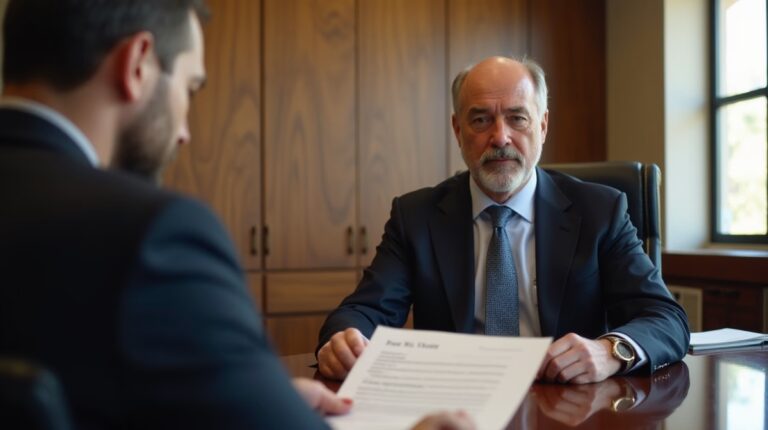
Dax discovered a handwritten codicil tucked inside his mother’s antique sewing machine – a complete reversal of her estate plan, leaving everything to a local animal shelter instead of him and his siblings. The problem? It was dated the day after she was declared incapacitated, and his aunt, the trustee, dismissed it as “rambling” and “not legally sound.” Now, he’s facing the agonizing prospect of a trust contest, unsure if the legal fees will devour what’s left of the estate. This scenario, unfortunately, plays out far too often in Temecula, and it’s the question many beneficiaries wrestle with: is fighting over a smaller inheritance actually worth the cost and emotional toll?
What are the Real Costs of Trust and Estate Litigation?

It’s easy to focus on the dollar amount at stake, but litigation expenses extend far beyond attorney’s fees. There are court filing fees, expert witness costs (accountants, appraisers, even medical professionals to establish incapacity), deposition costs, and potentially, the expense of compelling digital evidence. Even seemingly “simple” cases can quickly escalate. A protracted fight over a $500,000 trust, for instance, could easily consume $50,000 – $100,000 in legal fees. That’s a substantial chunk of the inheritance, and it’s crucial to realistically assess if the potential recovery justifies that expenditure. Many clients are surprised to learn the emotional cost is often higher – years of family discord and strained relationships can’t be easily quantified.
When Does a Trust Contest Make Financial Sense?
Generally, we advise clients to consider litigation when the disputed amount is significant relative to the anticipated legal costs. While there’s no hard and fast rule, a trust valued at $1 million or more often justifies a vigorous defense or contest, even with substantial legal expenses. However, for estates valued between $250,000 and $750,000, a more nuanced analysis is required. Several factors come into play. Is there strong evidence of fraud, undue influence, or incapacity? Are there clear violations of fiduciary duty by the trustee? If the case hinges on complex accounting issues or disputed valuations, the costs will inevitably climb.
How Can a CPA-Attorney Help You Minimize Risk?
As an estate planning attorney and a Certified Public Accountant with over 35 years of experience, I bring a unique perspective to these cases. My CPA background isn’t just a credential; it’s a practical advantage. We meticulously analyze the tax implications of each legal strategy, focusing on maximizing the step-up in basis for inherited assets and minimizing potential capital gains liabilities. Often, a seemingly small dispute over an asset’s valuation can have a significant impact on the estate’s overall tax burden. Furthermore, we excel at uncovering hidden assets or improper trustee accounting practices, which can dramatically increase the potential recovery.
Navigating Disputes Over Real Property – AB 2016 vs. Heggstad
Increasingly, we’re seeing disputes involving real estate that wasn’t formally transferred into the trust. For deaths occurring on or after April 1, 2025, California law provides an alternative to traditional Heggstad petitions. If the home is valued at $750,000 or less, a ‘Petition’ under AB 2016 (Probate Code § 13151) can be a much faster and more cost-effective solution. It streamlines the process of transferring ownership, avoiding the complexities of a full Heggstad trial. It’s a Petition – a court order – not an affidavit, which is easily challenged. Understanding this distinction is vital in selecting the appropriate legal strategy.
Protecting Digital Evidence in Modern Estate Disputes
Today’s estate disputes frequently involve digital evidence – texts, emails, social media posts – that can be crucial in establishing undue influence or incapacity. However, obtaining this evidence isn’t always straightforward. Without specific RUFADAA authority (Probate Code § 870), a trustee or beneficiary may be legally blocked from subpoenaing critical digital evidence from tech companies. We proactively address this issue by securing the necessary authorizations early in the litigation process, ensuring that vital evidence isn’t lost or inaccessible.
What Happens If the Trustee Mishandled Funds?
If you suspect the trustee has mishandled estate assets, you have legal recourse. Under Probate Code § 16420, beneficiaries can petition the court for an accounting and seek remedies such as removal of the trustee, surcharge (requiring the trustee to personally repay misappropriated funds), and, in severe cases, double damages. It’s important to note that simply disagreeing with the trustee’s decisions isn’t enough; you must demonstrate a breach of fiduciary duty or evidence of wrongdoing.
Can You Disinherit Someone Who Challenges the Trust?
Many trusts contain “No-Contest Clauses” designed to discourage beneficiaries from challenging the trust’s terms. However, these clauses aren’t absolute. Under Probate Code § 21311, a No-Contest Clause is only enforceable if the challenger brought the lawsuit without probable cause; simply suing the trustee does not automatically trigger disinheritance. The burden of proof is on the trustee to demonstrate the challenge was frivolous and lacked a reasonable basis.
What About Undue Influence from a Caregiver?
If a caregiver – a nurse, friend, or helper – is named as a beneficiary in a trust amendment drafted during their service to the senior, Probate Code § 21380 creates a presumption of fraud. This means the caregiver must prove the amendment wasn’t the result of coercion or undue influence. The burden of proof shifts entirely onto them, making these cases particularly vulnerable to challenge. Furthermore, beneficiaries should be mindful of the Statute of Limitations—once a trustee serves the mandatory § 16061.7 Notification, a strict 120-day clock begins; if a beneficiary fails to file a contest within this window, they are essentially barred from challenging the trust’s validity forever.
What separates a successful California trust distribution from a costly battle over interpretation and accounting?
Success in trust administration depends on more than just the document; it requires active management of assets, precise accounting to beneficiaries, and careful navigation of tax rules. Whether dealing with a blended family or complex real estate, understanding the mechanics of trust law is the only way to ensure the grantor’s wishes survive scrutiny.
| End Game | Factor |
|---|---|
| Tax Impact | Address GST tax allocation. |
| Closing | Review distribution risks. |
| Resolution | Finalize key participants. |
A stable trust administration relies on the trustee’s ability to balance investment duties, beneficiary communication, and tax compliance. When these elements are managed proactively, families can avoid the emotional and financial drain of litigation.
Verified Authority on California Trust Litigation & Disputes
-
The 120-Day Rule (Probate Code § 16061.7): California Probate Code § 16061.7 (Trust Notification)
The most critical statute in trust litigation. It establishes the 120-day deadline for contesting a trust after the notification is mailed. Missing this deadline usually ends the case before it starts. -
Caregiver Presumption (Probate Code § 21380): California Probate Code § 21380 (Care Custodian Presumption)
This statute protects seniors by presuming that gifts to care custodians are the result of fraud or undue influence. It is the primary weapon used to overturn “deathbed amendments” that favor a caregiver over family. -
No-Contest Clauses (Probate Code § 21311): California Probate Code § 21311 (Enforcement Limits)
Defines the strict limits on enforcing penalty clauses. It explains that a beneficiary can only be disinherited for suing if they lacked “probable cause” to bring the lawsuit. -
Petition for Instructions (Probate Code § 17200): California Probate Code § 17200 (Internal Affairs)
The “gateway” statute for most trust litigation. It allows a trustee or beneficiary to petition the court for instructions regarding the internal affairs of the trust, from interpreting terms to removing a trustee. -
Asset Recovery “Backup” (AB 2016): California Probate Code § 13151 (Petition for Succession)
Effective April 1, 2025, this statute provides a streamlined path (Judge’s Order) to resolve disputes over ownership of a primary residence valued up to $750,000, often avoiding costly Heggstad litigation. -
Digital Discovery (RUFADAA): California Probate Code § 870 (RUFADAA)
Essential for modern litigation. This act governs who can access a decedent’s digital communications—often the “smoking gun” evidence in undue influence or capacity trials.
|
Attorney Advertising, Legal Disclosure & Authorship
ATTORNEY ADVERTISING.
This content is provided for general informational and educational purposes only and does not constitute legal, financial, or tax advice. Under the California Rules of Professional Conduct and State Bar advertising regulations, this material may be considered attorney advertising. Reading this content does not create an attorney-client relationship or any professional advisory relationship. Laws vary by jurisdiction and are subject to change, including recent 2026 developments under California’s AB 2016 and evolving federal estate and reporting requirements. You should consult a qualified attorney or advisor regarding your specific circumstances before taking action.
Responsible Attorney:
Steven F. Bliss, California Attorney (Bar No. 147856).
Local Office:
The Law Firm of Steven F. Bliss Esq.43920 Margarita Rd Ste F Temecula, CA 92592 (951) 223-7000
The Law Firm of Steven F. Bliss Esq. is a practice location and trade name used by Steven F. Bliss, Esq., a California-licensed attorney.
About the Author & Legal Review Process
This article was researched and drafted by the Legal Editorial Team of the Law Firm of Steven F. Bliss, Esq.,
a collective of attorneys, legal writers, and paralegals dedicated to translating complex legal concepts into clear, accurate guidance.
Legal Review:
This content was reviewed and approved by Steven F. Bliss, a California-licensed attorney (Bar No. 147856). Mr. Bliss concentrates his practice in estate planning and estate administration, advising clients on proactive planning strategies and representing fiduciaries in probate and trust administration proceedings when formal court involvement becomes necessary.
With more than 35 years of experience in California estate planning and estate administration,
Mr. Bliss focuses on structuring enforceable estate plans, guiding fiduciaries through court-supervised proceedings, resolving creditor and notice issues, and coordinating asset management to support compliant, timely distributions and reduce fiduciary risk. |