
|
Legal & Tax Disclosure
ATTORNEY ADVERTISING.
This article is provided for general informational purposes only and does not constitute legal, financial, or tax advice. Reading this content does not create an attorney-client or professional advisory relationship. Laws vary by jurisdiction and are subject to change. You should consult a qualified professional regarding your specific circumstances. |
Emily just called, frantic. Her mother passed six months ago, leaving a beautiful home in Temecula, but Emily lives across the country and hasn’t been able to get down here to deal with it. She’d hired a contractor to make some repairs, gave him a key, and now he’s vanished with $8,000 and a lot of her mother’s belongings. This isn’t an isolated incident; vacant properties are magnets for trouble, and inheriting property from out of state adds layers of complexity. Protecting assets during probate is paramount, and a seemingly simple situation can quickly escalate into a legal and financial nightmare.
What Immediate Steps Should I Take to Protect a Vacant Inheritance?
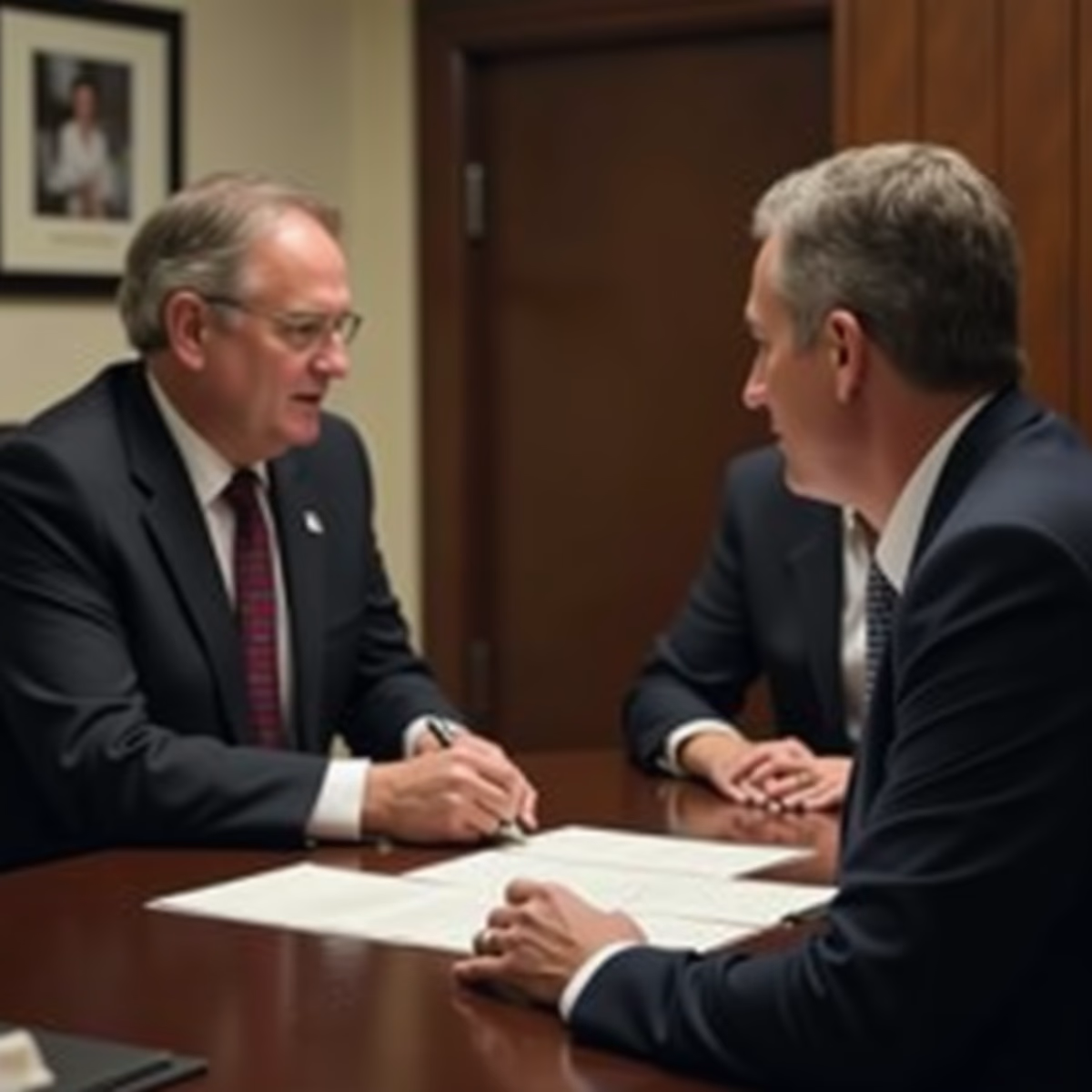
The first 72 hours are critical. Beyond grief, your immediate focus must be physical security. Change the locks immediately. Don’t assume the existing locks are sufficient, even if you don’t know if anyone else has a key. A professional locksmith can rekey all doors and windows. Next, thoroughly document the property’s condition. Photographs and videos are invaluable, capturing everything before you start any repairs or cleaning. This establishes a baseline for potential disputes later. Consider installing a smart home security system with remote monitoring – a relatively inexpensive safeguard given the potential losses. Don’t rely on neighbors alone; while well-intentioned, they can’t provide the same level of consistent protection.
What About Legal Authority? When Can I Actually Do Things?
You can’t simply start making decisions about the property until the court grants you legal authority. This means waiting to be officially appointed as the Personal Representative (Executor) of the estate. Once “Letters Testamentary” or “Letters of Administration” are issued, you have the legal power to act on behalf of the estate. However, even then, your actions are governed by strict rules. For example, if you have full authority under the Independent Administration of Estates Act (IAEA), you can take most actions without a court hearing, but you MUST mail a ‘Notice of Proposed Action’ to all interested parties 15 days before taking the action. If no one objects, you are protected from future liability. Acting before you receive Letters, or without following proper procedures, can expose you to personal liability.
How Do I Handle Mail and Official Notices?
This seems basic, but it’s surprisingly common to overlook. California Rule of Court 2.200 requires that if the executor or the attorney moves or changes their email/phone, they must serve and file a Notice of Change of Address (Form MC-040) immediately. The court relies on mail for notices; missing a notice because of an old address can lead to a bench warrant or removal. Designate a reliable mailing address – ideally a physical office, not a P.O. Box – and check it regularly. Consider a mail forwarding service if you’re not local to Temecula.
What are the Time Limits for Closing the Estate?
Failing to meet deadlines can create serious problems. Probate Code § 12200 states that an executor has one year (12 months) from the date Letters are issued to close the estate. If a federal estate tax return is required (rare under the 2026 OBBBA $15M exemption), this extends to 18 months. If you cannot close by then, you MUST file a Status Report to explain the delay. Delays can trigger court scrutiny and potentially lead to your removal as Personal Representative. The Inventory deadline is equally crucial.
What About the Inventory and Appraisal?
Probate Code § 8800 requires the Personal Representative to file the ‘Inventory and Appraisal’ within 4 months of receiving Letters. Failure to meet this deadline is a common reason for court appearances (OSC hearings) and potential removal. The Inventory lists all estate assets, and the Appraisal establishes their value. As a CPA, I emphasize the importance of accurate valuation, especially for real property. The “step-up in basis” rule – a significant tax advantage – relies on the appraised value at the date of death. This can dramatically reduce capital gains taxes when the property is eventually sold. A qualified appraiser is essential.
How Should I Handle Estate Funds During Probate?
Proper handling of estate finances is non-negotiable. Probate Code § 9700 states that estate funds must be kept in insured accounts (FDIC) within California. You generally cannot invest in risky assets or commingle estate money with personal funds. Doing so is a breach of fiduciary duty. Open a dedicated estate checking account and use it exclusively for estate-related expenses. Keep meticulous records of all income and disbursements. Don’t pay bills from your personal account and then reimburse yourself; that’s a red flag.
What Should I Do with Confidential Information?
Protecting sensitive data is critical. The Confidential Supplement (Form DE-147S) dictates that social security numbers and birth dates should never be placed in the public court file. They belong on the Confidential Supplement to Duties and Liabilities, which is seen only by the court clerk and judge. Be equally careful with financial account numbers and other personal information.
For over 35 years, I’ve guided families through the probate process here in Temecula, combining my legal expertise with my CPA background. The ability to understand the tax implications of estate planning and administration – like maximizing the step-up in basis and minimizing capital gains – provides a distinct advantage to my clients. It’s not just about navigating the legal hurdles; it’s about protecting their financial future.
What failures trigger contested proceedings and court intervention in California probate administration?
Success in probate court depends less on the size of the estate and more on the accuracy of the petition and the behavior of the fiduciary. Whether the issue is a forgotten asset, a contested creditor claim, or a disagreement among siblings, understanding the procedural triggers for court intervention is the best defense against prolonged administration.
| Authority Source | Why It Matters |
|---|---|
| The Court | See the role of the probate court. |
| The Law | Review probate governing law. |
| Legal Basis | Check governing legal authorities. |
Ultimately, the difference between a routine distribution and a protracted legal battle often comes down to preparation. By anticipating the demands of the Probate Code and addressing potential friction points with beneficiaries and creditors upfront, fiduciaries can navigate the system with greater confidence and lower liability.
Verified Authority on Probate Case Management
-
Mandatory Closing Timeline: California Probate Code § 12200 (Time for Closing)
The clock starts ticking the day Letters are issued. You have 12 months to close the estate (or 18 months if filing a federal tax return). If you miss this deadline, you must file a Status Report of Administration to explain the delay to the judge, or face potential sanctions. -
Notice of Proposed Action (NOPA): California Probate Code § 10580 (IAEA Powers)
This is the executor’s most powerful case management tool. It allows you to sell cars, abandon worthless property, or compromise claims without a court hearing, provided you give beneficiaries 15 days’ notice and receive no written objections. -
Inventory & Appraisal: California Probate Code § 8800 (Filing Deadline)
Effective case management relies on knowing what you have. The law requires the Inventory and Appraisal to be filed within 4 months of appointment. This document lists every asset and its value as of the date of death, serving as the baseline for all accounting. -
Duty to Deposit Money: California Probate Code § 9700 (Estate Funds)
The Personal Representative has a strict fiduciary duty to keep estate cash safe. Funds must be deposited in insured accounts (banks or trust companies authorized in California). Keeping cash in a personal safe or a non-interest-bearing checking account for too long can result in a surcharge. -
Change of Address: California Rules of Court 2.200
A simple but critical management task. If the administrator, executor, or attorney changes their mailing address or email, they must file a Notice of Change of Address (Form MC-040) immediately. The court sends hearing notices by mail; “I didn’t get the letter” is not a valid defense in probate court. -
Duties & Liabilities Form: Judicial Council Form DE-147
Before Letters are issued, every personal representative must sign this form acknowledging they understand their duties. It serves as a permanent record that you were warned about commingling funds, tax deadlines, and the requirement to keep accurate records.
|
Attorney Advertising, Legal Disclosure & Authorship
ATTORNEY ADVERTISING.
This content is provided for general informational and educational purposes only and does not constitute legal, financial, or tax advice. Under the California Rules of Professional Conduct and State Bar advertising regulations, this material may be considered attorney advertising. Reading this content does not create an attorney-client relationship or any professional advisory relationship. Laws vary by jurisdiction and are subject to change, including recent 2026 developments under California’s AB 2016 and evolving federal estate and reporting requirements. You should consult a qualified attorney or advisor regarding your specific circumstances before taking action.
Responsible Attorney:
Steven F. Bliss, California Attorney (Bar No. 147856).
Local Office:
The Law Firm of Steven F. Bliss Esq.43920 Margarita Rd Ste F Temecula, CA 92592 (951) 223-7000
The Law Firm of Steven F. Bliss Esq. is a practice location and trade name used by Steven F. Bliss, Esq., a California-licensed attorney.
About the Author & Legal Review Process
This article was researched and drafted by the Legal Editorial Team of the Law Firm of Steven F. Bliss, Esq.,
a collective of attorneys, legal writers, and paralegals dedicated to translating complex legal concepts into clear, accurate guidance.
Legal Review:
This content was reviewed and approved by Steven F. Bliss, a California-licensed attorney (Bar No. 147856). Mr. Bliss concentrates his practice in estate planning and estate administration, advising clients on proactive planning strategies and representing fiduciaries in probate and trust administration proceedings when formal court involvement becomes necessary.
With more than 35 years of experience in California estate planning and estate administration,
Mr. Bliss focuses on structuring enforceable estate plans, guiding fiduciaries through court-supervised proceedings, resolving creditor and notice issues, and coordinating asset management to support compliant, timely distributions and reduce fiduciary risk. |