
|
Legal & Tax Disclosure
ATTORNEY ADVERTISING.
This article is provided for general informational purposes only and does not constitute legal, financial, or tax advice. Reading this content does not create an attorney-client or professional advisory relationship. Laws vary by jurisdiction and are subject to change. You should consult a qualified professional regarding your specific circumstances. |
Emily just received devastating news. After years of meticulous estate planning, her mother’s probate was finalized six months ago, and the assets distributed. Now, her aunt discovered a signed codicil tucked inside an old photo album – a codicil that significantly alters the beneficiaries. Emily faces potential legal battles, delays, and the emotional strain of revisiting a painful process, all because a critical document wasn’t located during the initial probate. The cost of rectifying this situation could easily run into the tens of thousands, not to mention the fractured family relationships.
The discovery of a codicil after probate has been completed presents a complex legal scenario, often triggering a petition to revoke or modify the finalized probate order. California law allows for this, but it’s far from straightforward. Successfully introducing a belated codicil hinges on demonstrating to the court that despite the closed case, compelling evidence exists to warrant reopening probate. This requires more than simply producing the document; it demands proof that the codicil was properly executed before the decedent’s death, and that its existence was unknown at the time of the original probate proceedings.
The biggest hurdle is establishing that the codicil wasn’t intentionally withheld. The court will scrutinize the circumstances surrounding its discovery, questioning why it wasn’t found during the initial search for testamentary documents. Was it deliberately hidden? Was there a reasonable explanation for its delayed appearance? The burden of proof falls squarely on the party attempting to introduce the codicil. Without a convincing explanation, the court may assume improper motives and reject the petition. If a codicil is invalidated, assets may force full probate; however, for deaths on or after April 1, 2025, estates under $208,850 (per CPC § 13100) may still qualify for simplified procedures. This limit is set until 2028.
What Happens to Assets Already Distributed?
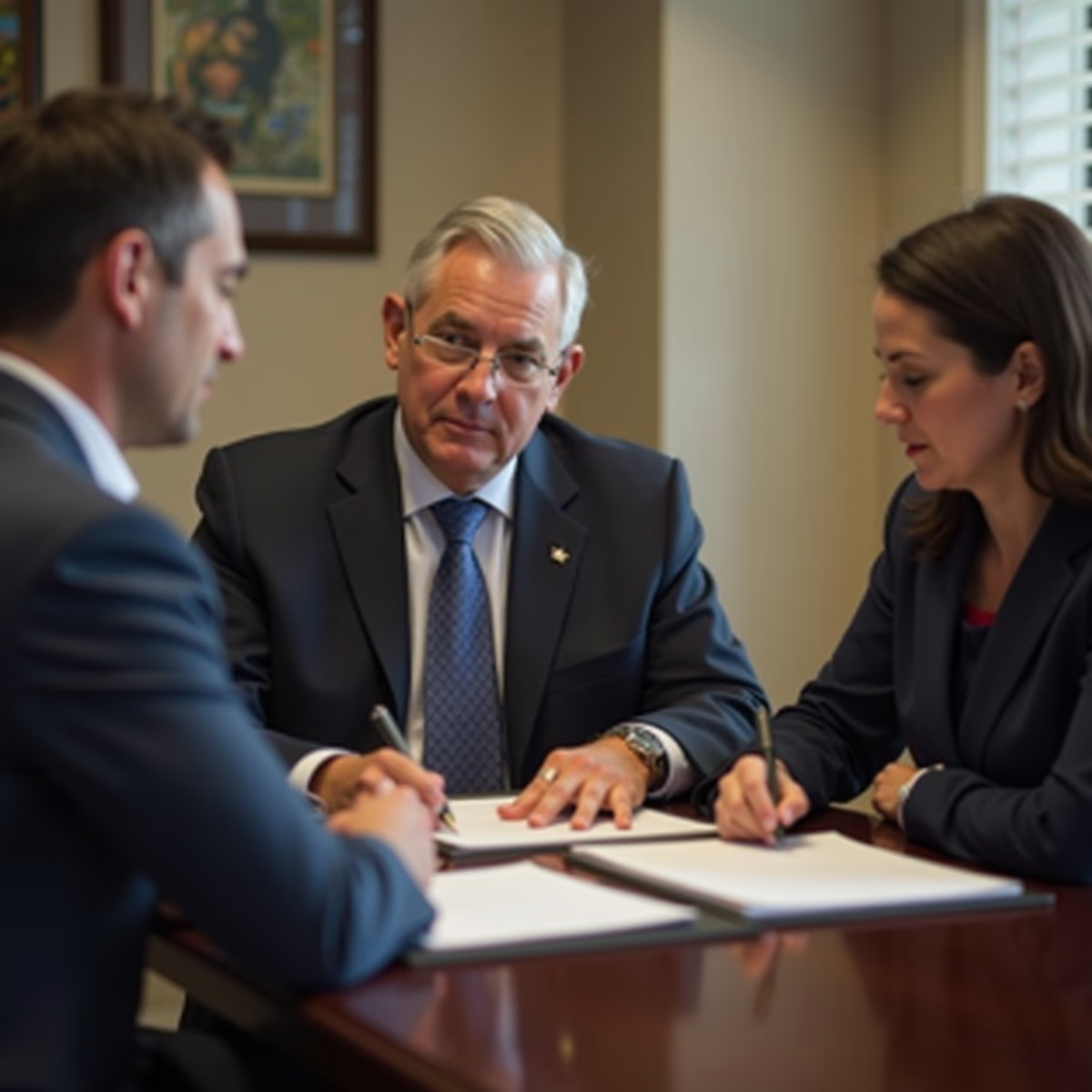
Even if the court accepts the belated codicil, the process doesn’t automatically revert the completed distribution of assets. The court must determine the appropriate remedy, which could involve a reassignment of assets from current beneficiaries to those designated in the codicil. This often necessitates legal action to recover assets, such as initiating claims against beneficiaries who received distributions under the original probate order. This “unwinding” of the estate can be incredibly complex and expensive, involving potential lawsuits, liens, and protracted negotiations.
The feasibility of asset recovery depends heavily on the nature of the distributed assets. Cash is relatively easy to reclaim, but real estate, investments, or personal property may be more difficult to recover, especially if the new beneficiary has already sold or used the assets. Furthermore, if the original beneficiaries relied on the distributions in good faith (for example, using the funds to purchase a home), the court may offer them some protection, potentially reducing the amount they are required to return.
How Does This Impact Trust Funding?
The scenario is even more complicated when the codicil concerns a trust. A codicil can alter the terms of a trust, redirecting assets or changing beneficiaries. If the trust wasn’t fully funded before the probate case closed, the belated codicil may dictate how those remaining assets are to be distributed. However, if the trust was fully funded, the court’s ability to modify the trust terms is more limited. Trusts are generally governed by their own internal rules and the terms of the trust document itself.
What About Digital Assets and the RUFADAA?
The rise of digital assets adds another layer of complexity. A standard codicil often fails to include the specific RUFADAA language (CPC § 870) required to bypass federal privacy laws, potentially leaving your heirs locked out of crypto-wallets and email accounts. If the belated codicil doesn’t address these digital holdings, accessing them could become a major obstacle. This is why proper estate planning needs to be regularly updated to reflect the increasingly digital nature of our assets.
Why a CPA’s Perspective is Crucial
As an attorney and CPA with over 35 years of experience, I often see these situations arise from a lack of comprehensive planning. My unique perspective allows me to not only address the legal ramifications of a belated codicil but also the tax implications. For example, if the new codicil significantly alters the beneficiaries, it could affect the availability of the annual gift tax exclusion or the estate tax exemption. Properly valuing the assets subject to the codicil is also critical to minimizing potential capital gains taxes. Understanding the nuances of step-up in basis—and ensuring that valuations are defensible—is a significant advantage my clients appreciate.
Protecting Your Estate from Post-Probate Issues
Preventing this situation requires diligence and proactive estate planning. Regularly review your estate plan, including your will and any codicils, to ensure they accurately reflect your wishes and current circumstances. Maintain a complete and organized record of all testamentary documents, and inform your family members of their location. Consider using a qualified attorney to oversee the probate process and ensure that all necessary searches for wills and codicils are conducted thoroughly. Furthermore, as of March 2025, FinCEN has exempted domestic U.S. LLCs from BOI reporting; however, foreign-registered entities in the U.S. still face mandatory filing requirements and potential penalties. And finally, remember that the 2026 ‘tax cliff’ was averted by the OBBBA, which permanently increased the Federal Estate Tax Exemption to $15 million per person effective Jan 1, 2026. Old formula clauses should be reviewed to ensure they don’t over-fund trusts under these new limits.
How do California courts decide whether a will reflects true intent or creates ambiguity?
In California, a last will and testament is reviewed under probate standards that focus on intent, capacity, and execution. Clear drafting reduces ambiguity, limits misinterpretation, and helps families avoid unnecessary conflict during estate administration.
To create a valid document, you must ensure the signer has legal capacity, strictly follow California will rules, and ensure you are correctly naming the testator to prevent identity disputes.
For California residents, understanding how intent, authority, and compliance interact is one of the most effective ways to protect family harmony and estate integrity. A will that anticipates probate scrutiny is far more likely to be honored as written and far less likely to become the source of unnecessary conflict.
Primary Legal Authorities Governing Probate and Estate Administration
-
Probate & Local Court Rules:
Riverside Superior Court – Probate Division
Official Riverside County probate rules (Title 7), filing procedures, examiner notes, and specific protocols for remote appearances via the court’s designated platform for non-evidentiary hearings. -
Attorney Licensing & Ethical Standards:
State Bar of California
The authoritative source to verify attorney license status, disciplinary history, and current ethical rules governing California attorneys and client trust accounts (IOLTA). -
Judicial Council Forms & Self-Help:
California Courts – Wills, Estates, and Probate
State-issued probate forms and guidance, including small estate procedures ($208,850 limit), primary residence transfers under AB 2016 ($750,000 limit), and executor responsibilities. -
Federal Estate & Gift Tax Law:
IRS Estate Tax Guidelines
Federal rules governing estate and gift tax filing, including the permanent 2026 exemption of $15 million per individual (indexed for inflation).
|
Attorney Advertising, Legal Disclosure & Authorship
ATTORNEY ADVERTISING.
This content is provided for general informational and educational purposes only and does not constitute legal, financial, or tax advice. Under the California Rules of Professional Conduct and State Bar advertising regulations, this material may be considered attorney advertising. Reading this content does not create an attorney-client relationship or any professional advisory relationship. Laws vary by jurisdiction and are subject to change, including recent 2026 developments under California’s AB 2016 and evolving federal estate and reporting requirements. You should consult a qualified attorney or advisor regarding your specific circumstances before taking action.
Responsible Attorney:
Steven F. Bliss, California Attorney (Bar No. 147856).
Local Office:
The Law Firm of Steven F. Bliss Esq.43920 Margarita Rd Ste F Temecula, CA 92592 (951) 223-7000
The Law Firm of Steven F. Bliss Esq. is a practice location and trade name used by Steven F. Bliss, Esq., a California-licensed attorney.
About the Author & Legal Review Process
This article was researched and drafted by the Legal Editorial Team of the Law Firm of Steven F. Bliss, Esq.,
a collective of attorneys, legal writers, and paralegals dedicated to translating complex legal concepts into clear, accurate guidance.
Legal Review:
This content was reviewed and approved by Steven F. Bliss, a California-licensed attorney (Bar No. 147856). Mr. Bliss concentrates his practice in estate planning and estate administration, advising clients on proactive planning strategies and representing fiduciaries in probate and trust administration proceedings when formal court involvement becomes necessary.
With more than 35 years of experience in California estate planning and estate administration,
Mr. Bliss focuses on structuring enforceable estate plans, guiding fiduciaries through court-supervised proceedings, resolving creditor and notice issues, and coordinating asset management to support compliant, timely distributions and reduce fiduciary risk. |