|
Legal & Tax Disclosure
ATTORNEY ADVERTISING.
This article is provided for general informational purposes only and does not constitute legal, financial, or tax advice. Reading this content does not create an attorney-client or professional advisory relationship. Laws vary by jurisdiction and are subject to change. You should consult a qualified professional regarding your specific circumstances. |
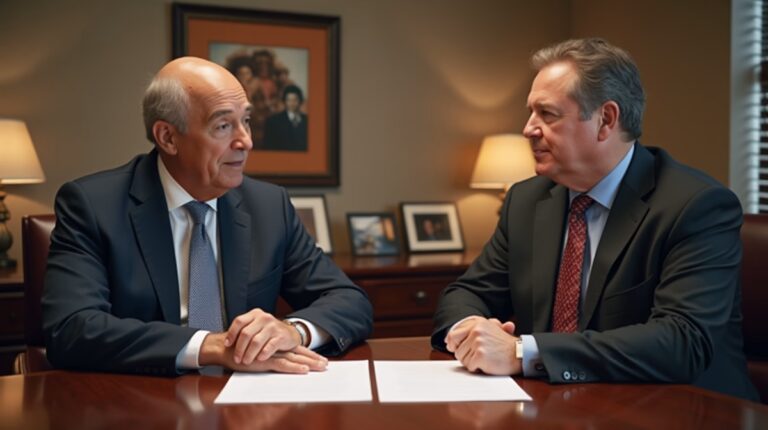
Herman just received a devastating phone call. His wife, after 28 years of marriage, filed for divorce—and simultaneously removed him as a beneficiary on his life insurance policy. He’d meticulously planned for retirement, assuming those benefits would provide a crucial income stream. Now, facing a fractured family and potential financial hardship, he’s scrambling to understand his rights. The cost of inaction—losing those promised benefits—could easily exceed $150,000.
Divorce, while legally dissolving a marriage, doesn’t automatically unwind all estate planning documents. This is a common misconception with potentially disastrous consequences. While a divorce decree typically includes provisions revoking spousal designations in wills and trusts, it’s not a guaranteed outcome, and relying on that assumption is incredibly risky. The specifics vary widely depending on state law and the precise wording of your governing documents.
The most frequent error I see after 35+ years practicing as an Estate Planning Attorney and CPA is clients believing the divorce decree speaks for itself. It doesn’t. A divorce court focuses on the division of marital property, alimony, and child custody. It rarely, if ever, delves into the intricate details of beneficiary designations on accounts like life insurance, retirement plans, or investment portfolios. Those designations, created outside of the divorce proceedings, often remain in effect unless specifically addressed.
Consider the interplay between divorce and retirement accounts. Qualified retirement plans (401(k), IRA, pension) generally require a specific court order, known as a Qualified Domestic Relations Order (QDRO), to divide assets and change beneficiary designations. Without that QDRO, the ex-spouse likely remains the beneficiary, even after the divorce is finalized. This is especially critical if a previous beneficiary designation predates the marriage. The unintended consequence can be significant, directing funds to someone you no longer wish to benefit.
Real estate presents another layer of complexity. While divorce proceedings typically address ownership transfer, the transfer doesn’t automatically update estate planning documents tied to that property. For instance, a Transfer on Death Deed naming the ex-spouse as a beneficiary would remain valid unless a new deed is recorded. And for deaths on or after April 1, 2025, a primary residence worth $750,000 or less (gross value) may qualify for a simplified transfer under AB 2016 (Probate Code § 13151), bypassing formal probate.
My unique perspective as a CPA is invaluable in these situations. I can immediately assess the tax implications of beneficiary designations and advise clients on strategies to minimize capital gains or maximize the step-up in basis upon death. Valuation of assets, particularly business interests or complex investments, is critical—and often overlooked—during a divorce. A poorly structured transfer can lead to substantial tax liabilities down the line.
Business assets, like LLCs, require particular attention. Not only must beneficiary designations on life insurance policies covering the business be updated, but the ownership structure itself might need revision. As of January 1, 2026, non-exempt LLCs must comply with FinCEN’s Beneficial Ownership Information (BOI) reporting; executors and beneficiaries managing inherited entities must file updated reports within 30 days of ownership changes to avoid significant civil penalties.
Furthermore, the rise of digital assets adds another challenge. Clients often forget to account for cryptocurrency, online accounts, or digital photos in their estate plans. Under California’s RUFADAA (Probate Code § 870), beneficiaries and executors are legally barred from accessing digital accounts, photos, and crypto-wallets unless the decedent explicitly granted authority in their Will, Trust, or via an ‘online tool’.
And don’t forget about the potential impact on government benefits. While California eliminated the asset test in 2024, receiving an inheritance outright exposes those assets to Medi-Cal Estate Recovery claims upon the beneficiary’s death; a Special Needs Trust is required to protect the assets from the state.
Finally, even if the total value of assets without valid beneficiaries is relatively low, it’s vital to be proactive. Assets without valid beneficiaries may trigger probate if the total value of personal property exceeds $208,850 (for deaths occurring on or after April 1, 2025); a Will alone does not bypass this limit.
The bottom line? Divorce is a critical life event demanding a comprehensive review of all estate planning documents. Don’t assume the divorce decree takes care of everything. Proactive revision is essential to ensure your wishes are honored and your loved ones are protected.
What makes a California will legally enforceable when it matters most?

In California, a last will and testament operates within a probate system that emphasizes intent, clarity, and procedural compliance. When properly drafted, a will does more than distribute property—it creates legally enforceable instructions that guide courts, fiduciaries, and beneficiaries through administration with fewer disputes and less uncertainty.
To create a valid document, you must ensure the signer has legal capacity, strictly follow California will rules, and ensure you are correctly naming the testator to prevent identity disputes.
For California residents, understanding how intent, authority, and compliance interact is one of the most effective ways to protect family harmony and estate integrity. A will that anticipates probate scrutiny is far more likely to be honored as written and far less likely to become the source of unnecessary conflict.
Official Resources for Probate, Legal Standards, and Tax Rules
-
Probate / Beneficiaries:
Riverside Superior Court – Probate Division:
Provides essential Riverside-specific “Local Rules” (Title 7) and forms effective January 1, 2026. This portal includes the mandatory eSubmit protocols for Temecula filings and the calendar for the Probate Division at the Historic Courthouse. -
Legal Standards:
State Bar of California:
The official regulatory agency for California’s 270,000+ attorneys; use this portal to verify a lawyer’s license status, check for a history of disciplinary actions, and access the 2026 guidelines for ethical attorney-client fee agreements. -
Tax / Estate Tax:
IRS Estate Tax Guidelines:
The authoritative federal resource for estate and gift tax filing; this page reflects the permanent exemption of $15 million per individual (effective Jan 1, 2026), which replaced the scheduled “tax cliff” from previous legislation. -
Self-Help / Forms:
California Courts – Wills, Estates, and Probate:
The Judicial Council’s primary self-help center offering standardized forms for 2026, including the updated $208,850 “Small Estate Affidavit” and the $750,000 “Primary Residence” simplified transfer procedure (AB 2016).
|
Attorney Advertising, Legal Disclosure & Authorship
ATTORNEY ADVERTISING.
This content is provided for general informational and educational purposes only and does not constitute legal, financial, or tax advice. Under the California Rules of Professional Conduct and State Bar advertising regulations, this material may be considered attorney advertising. Reading this content does not create an attorney-client relationship or any professional advisory relationship. Laws vary by jurisdiction and are subject to change, including recent 2026 developments under California’s AB 2016 and evolving federal estate and reporting requirements. You should consult a qualified attorney or advisor regarding your specific circumstances before taking action.
Responsible Attorney:
Steven F. Bliss, California Attorney (Bar No. 147856).
Local Office:
The Law Firm of Steven F. Bliss Esq.43920 Margarita Rd Ste F Temecula, CA 92592 (951) 223-7000
The Law Firm of Steven F. Bliss Esq. is a practice location and trade name used by Steven F. Bliss, Esq., a California-licensed attorney.
About the Author & Legal Review Process
This article was researched and drafted by the Legal Editorial Team of the Law Firm of Steven F. Bliss, Esq.,
a collective of attorneys, legal writers, and paralegals dedicated to translating complex legal concepts into clear, accurate guidance.
Legal Review:
This content was reviewed and approved by Steven F. Bliss, a California-licensed attorney (Bar No. 147856). Mr. Bliss concentrates his practice in estate planning and estate administration, advising clients on proactive planning strategies and representing fiduciaries in probate and trust administration proceedings when formal court involvement becomes necessary.
With more than 35 years of experience in California estate planning and estate administration,
Mr. Bliss focuses on structuring enforceable estate plans, guiding fiduciaries through court-supervised proceedings, resolving creditor and notice issues, and coordinating asset management to support compliant, timely distributions and reduce fiduciary risk. |