|
Legal & Tax Disclosure
ATTORNEY ADVERTISING.
This article is provided for general informational purposes only and does not constitute legal, financial, or tax advice. Reading this content does not create an attorney-client or professional advisory relationship. Laws vary by jurisdiction and are subject to change. You should consult a qualified professional regarding your specific circumstances. |
As an estate planning attorney and CPA with over 35 years of experience, I frequently advise trustees navigating these very situations. Emily’s demands, while aggressive, highlight a critical aspect of trust administration: ongoing transparency and adherence to reporting requirements. It’s not enough to simply be a good trustee; you must demonstrate good faith and accountability to the beneficiaries.
What Exactly Must a Trustee Report?
A trustee’s reporting duty isn’t a one-time event; it’s an ongoing obligation. California law (Probate Code § 16061.7) mandates regular accountings and reports, but the frequency and detail depend on the trust document itself. Many trusts specify annual or semi-annual reports, while others are triggered by specific events, like a change in beneficiaries or significant investment shifts.
Generally, a trustee must provide beneficiaries with information regarding:
- Trust Assets: A detailed list of all assets held within the trust, including cash, securities, real estate, and personal property.
- Income and Expenses: A clear accounting of all income received by the trust (dividends, interest, rent) and all expenses paid (property taxes, insurance, professional fees).
- Distributions: Documentation of all distributions made to beneficiaries, including the amount, date, and purpose.
- Investment Performance: A report on the performance of trust investments, often benchmarked against relevant market indices.
- Fees & Compensation: A transparent disclosure of any trustee fees or compensation received.
Even if the trust document is silent on reporting frequency, the law implies a duty to provide “reasonable information” upon request. Emily’s letter demonstrates the risk of ignoring even informal requests.
Informal vs. Formal Accountings: What’s the Difference?
Responding to Emily’s demands requires understanding the distinction between informal and formal accountings. An informal accounting is a less rigorous process, typically involving providing beneficiaries with copies of bank statements, brokerage statements, and expense receipts. It’s a good faith effort to demonstrate transparency and is often sufficient to satisfy reasonable beneficiaries.
However, an informal accounting isn’t legally binding. If Emily remains dissatisfied, she can petition the court for a formal accounting. This triggers a court-supervised process, requiring the trustee to submit detailed accountings to the court for approval. A formal accounting is significantly more time-consuming, expensive, and stressful. It also subjects the trustee’s actions to judicial scrutiny.
The CPA Advantage: Stepping Up Basis & Capital Gains
As a CPA as well as an attorney, I emphasize the importance of accurate tax reporting. Often overlooked is the “step-up in basis” benefit received upon the grantor’s death. Assets held in the trust receive a new cost basis equal to their fair market value on the date of death, potentially eliminating significant capital gains taxes when those assets are eventually sold. Properly documenting this basis is crucial, and a CPA can provide invaluable assistance. Failure to accurately report capital gains can lead to penalties and legal challenges from the beneficiaries.
Beneficiary Witnesses & Potential Legal Challenges
It’s vital to remember that beneficiary witnesses can create significant issues. According to California Probate Code § 6112, an ‘interested witness’ (a beneficiary) triggers a legal presumption of duress or fraud. Unless there are two other disinterested witnesses, the beneficiary may lose their gift, taking only what they would have received under intestacy rules. This is especially pertinent if there are disagreements over trust administration.
What if There’s a Dispute?
If a beneficiary is persistently unhappy or alleges mismanagement, consider proactive mediation. A neutral third party can facilitate communication and potentially resolve disputes without the need for costly litigation. However, if allegations of breach of fiduciary duty are serious (e.g., self-dealing, embezzlement), immediate legal counsel is essential.
Protecting Yourself as a Trustee
While California allowed temporary remote witnessing during the pandemic, the law (CPC § 6110) has reverted to requiring strict simultaneous presence; remote signatures are generally invalid for Wills unless they meet the narrow ‘Electronic Will’ standards of AB 298.
To minimize risk and ensure compliance, I advise trustees to:
-
Maintain meticulous records: Keep detailed records of all trust transactions, communications, and decisions.
Communicate proactively: Keep beneficiaries informed of significant events and address their concerns promptly.
Seek professional guidance: Consult with an experienced estate planning attorney and CPA to ensure compliance with all legal and tax requirements.
Consider a beneficiary report template: Utilizing a standardized template for reports ensures consistency and completeness.
Finally, remember that even a well-drafted trust document can’t guarantee a smooth administration. Proactive communication, diligent record-keeping, and professional guidance are essential for fulfilling your fiduciary duties and maintaining positive relationships with the beneficiaries. If a Will is invalidated, assets fall under intestacy; however, for deaths on or after April 1, 2025, estates with personal property under $208,850 (per CPC § 13100) may still bypass full probate via affidavit.
How do California courts decide whether a will reflects true intent or creates ambiguity?
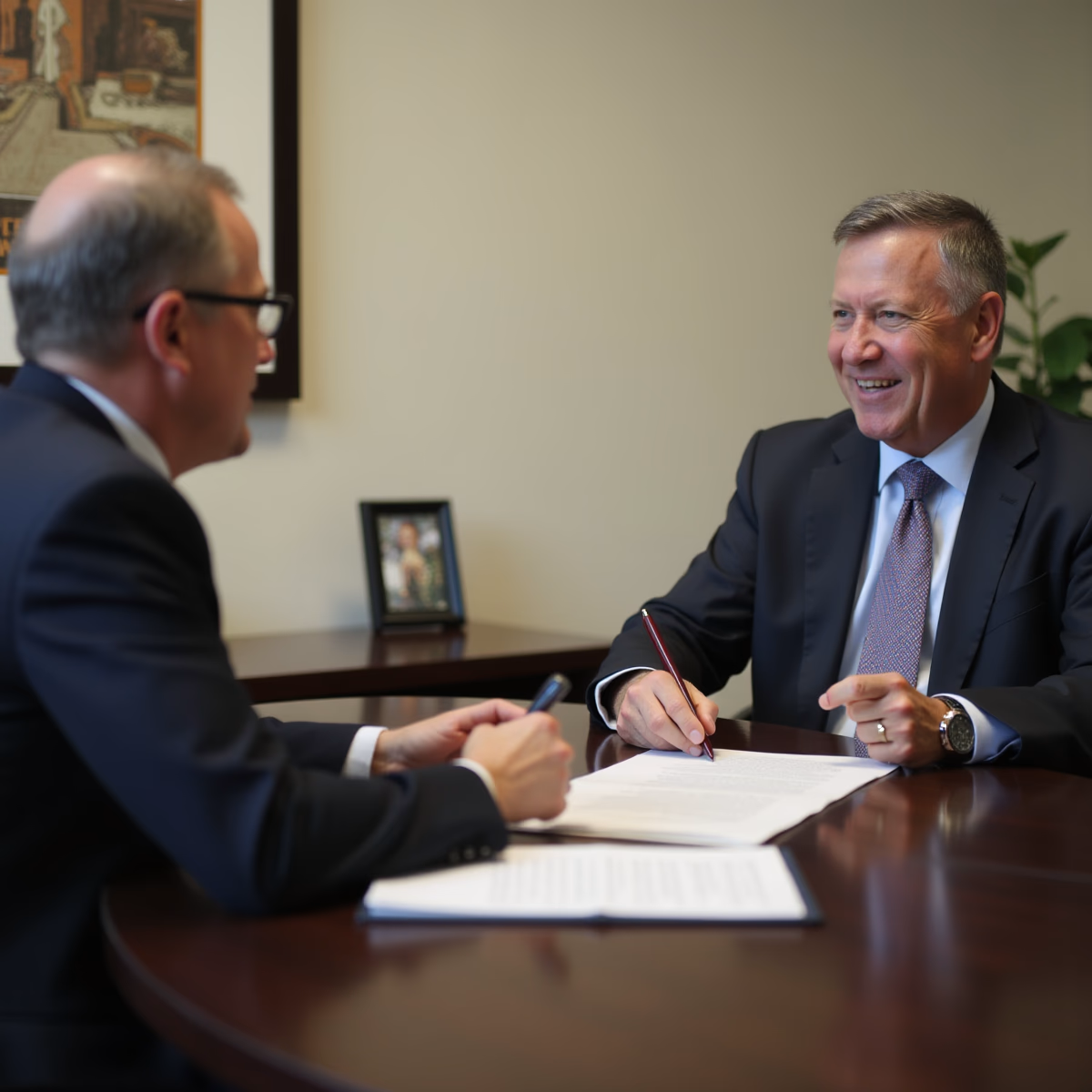
In California, a last will and testament is reviewed under probate standards that focus on intent, capacity, and execution. Clear drafting reduces ambiguity, limits misinterpretation, and helps families avoid unnecessary conflict during estate administration.
- Authority: Define executor duties clearly.
- Guardians: Establish guardianship for minors.
- Jurisdiction: Confirm domicile requirements.
For California residents, understanding how intent, authority, and compliance interact is one of the most effective ways to protect family harmony and estate integrity. A will that anticipates probate scrutiny is far more likely to be honored as written and far less likely to become the source of unnecessary conflict.
Resources for Legal Standards & Probate Procedure
-
Riverside Local Rules: Riverside Superior Court – Probate Division
Access the essential “Local Rules” (Title 7) effective January 1, 2026. This includes mandatory usage of the eSubmit Document Submission Portal, current Probate Examiner notes, and specific requirements for remote appearances via the court’s designated platform. -
Attorney Verification: State Bar of California
The official regulatory body for California attorneys. Use this to verify a lawyer’s “Certified Specialist” status in Estate Planning or to access 2026 guidelines on the ethical handling of Client Trust Accounts (IOLTA). -
Self-Help & Forms: California Courts – Wills, Estates, and Probate
The Judicial Council’s official portal. It includes the updated 2026 forms for the $208,850 personal property threshold and the $750,000 “Primary Residence” simplified transfer procedure (AB 2016). -
Federal Estate Tax Exemption: IRS Estate Tax Guidelines
The authoritative federal resource for estate and gift tax filing. It reflects the permanent exemption of $15 million per individual (effective Jan 1, 2026), replacing the previously scheduled Tax Cuts and Jobs Act (TCJA) sunset.
|
Attorney Advertising, Legal Disclosure & Authorship
ATTORNEY ADVERTISING.
This content is provided for general informational and educational purposes only and does not constitute legal, financial, or tax advice. Under the California Rules of Professional Conduct and State Bar advertising regulations, this material may be considered attorney advertising. Reading this content does not create an attorney-client relationship or any professional advisory relationship. Laws vary by jurisdiction and are subject to change, including recent 2026 developments under California’s AB 2016 and evolving federal estate and reporting requirements. You should consult a qualified attorney or advisor regarding your specific circumstances before taking action.
Responsible Attorney:
Steven F. Bliss, California Attorney (Bar No. 147856).
Local Office:
The Law Firm of Steven F. Bliss Esq.43920 Margarita Rd Ste F Temecula, CA 92592 (951) 223-7000
The Law Firm of Steven F. Bliss Esq. is a practice location and trade name used by Steven F. Bliss, Esq., a California-licensed attorney.
About the Author & Legal Review Process
This article was researched and drafted by the Legal Editorial Team of the Law Firm of Steven F. Bliss, Esq.,
a collective of attorneys, legal writers, and paralegals dedicated to translating complex legal concepts into clear, accurate guidance.
Legal Review:
This content was reviewed and approved by Steven F. Bliss, a California-licensed attorney (Bar No. 147856). Mr. Bliss concentrates his practice in estate planning and estate administration, advising clients on proactive planning strategies and representing fiduciaries in probate and trust administration proceedings when formal court involvement becomes necessary.
With more than 35 years of experience in California estate planning and estate administration,
Mr. Bliss focuses on structuring enforceable estate plans, guiding fiduciaries through court-supervised proceedings, resolving creditor and notice issues, and coordinating asset management to support compliant, timely distributions and reduce fiduciary risk. |