
This article is provided for general informational purposes only and does not constitute legal, financial, or tax advice.
Reading this content does not create an attorney-client or professional advisory relationship.
Laws vary by jurisdiction and are subject to change. You should consult a qualified professional regarding your specific circumstances.
Duane just received a letter. Not a letter of condolence, not a birthday card, but a Notice of Petition to Remove the Executor of his mother’s estate. His brother, Mark, was appointed, and now Duane suspects Mark isn’t just incompetent—he’s been systematically siphoning funds for his own benefit. Duane feels helpless, like he’s watching his mother’s legacy disappear, and the legal fees to fight this are already astronomical. He doesn’t know where to begin proving Mark’s betrayal.
What Constitutes a Breach of Fiduciary Duty in an Estate?
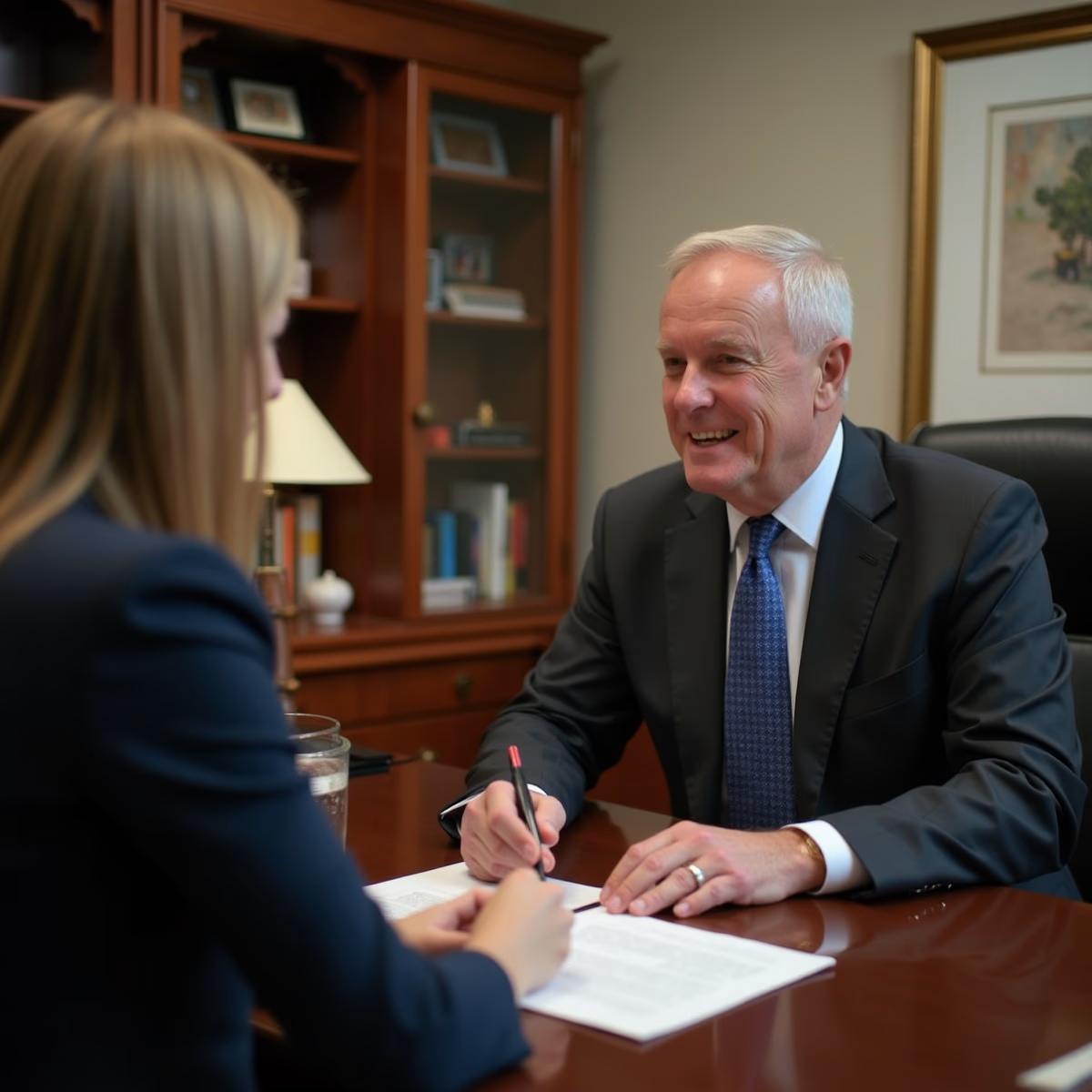
As executor or trustee, your sibling, friend, or chosen representative owes the highest duty of care to the beneficiaries of the estate—a fiduciary duty. This isn’t just about honesty; it’s about acting solely in the best interest of the estate, avoiding conflicts of interest, and meticulously documenting all actions. A breach occurs when that duty is violated, causing financial harm to the estate. Common examples include self-dealing (using estate assets for personal gain), failing to properly account for assets, making unauthorized distributions, or failing to invest prudently. The standard isn’t perfection, but reasonable care, skill, and caution. However, even a series of seemingly small errors, if they demonstrate a pattern of negligence or disregard for the beneficiaries’ interests, can add up to a breach.
What Evidence Do I Need to Prove a Breach?
Gathering concrete evidence is paramount. Suspicion isn’t enough. You’ll need documentation to support your claims. Bank statements: Compare estate account statements with receipts and invoices. Look for unauthorized withdrawals, transfers to personal accounts, or unusual fees. Inventory and Appraisal Records: Scrutinize the estate’s inventory. Were assets properly valued? Were items sold below market value? Communication Records: Emails, letters, and text messages can reveal the executor’s intentions or actions. Accounting Records: Executors are legally required to maintain detailed accounting records. A lack of transparency or incomplete records is a red flag. Witness Testimony: Statements from family members or other individuals who observed questionable behavior can be compelling. Don’t underestimate the power of a seemingly small detail that another person noticed.
Can I Use Discovery to Obtain Missing Records?
Absolutely. Probate Code § 1000 states that the rules of evidence and discovery in probate are the same as in civil lawsuits. This means you have powerful tools at your disposal. You can issue Subpoenas to compel banks, financial institutions, and other parties to produce records. You can also take Depositions of the executor, witnesses, and anyone else with relevant information. Discovery allows you to uncover hidden assets, expose conflicts of interest, and build a solid case against the breaching executor. However, be mindful of the cost. Discovery can be expensive, so it’s crucial to focus your efforts on the most relevant information.
What if the Executor is Hiding Assets?
This is unfortunately common. If you suspect the executor is concealing assets, you need to broaden your search. Look beyond the obvious bank accounts and real estate. Consider life insurance policies, retirement accounts, investment portfolios, and business interests. Public Records Searches: Search county property records, business filings, and online databases for hidden assets. Forensic Accounting: A forensic accountant can trace funds, identify hidden accounts, and uncover fraudulent transactions. Section 850 Petition: Litigation over who owns a specific asset (e.g., “Mom put my name on the deed, but the estate claims it”) is handled via a Probate Code § 850 Petition. This allows the Probate Court to act like a Civil Court and issue orders transferring title. Don’t assume the executor’s inventory is complete or accurate. Aggressively pursue all leads and utilize the legal tools available to uncover the truth.
What Remedies Are Available if a Breach is Proven?
If you successfully prove a breach of fiduciary duty, the court has several remedies available. The executor can be forced to return any improperly taken funds, plus interest. They can also be held personally liable for the estate’s losses. Critically, Probate Code § 859 provides that if a person uses undue influence, fraud, or bad faith to take estate assets, the court can order them to return the property PLUS pay a penalty of twice the value of the assets recovered. This “double damages” statute is the most powerful weapon in probate litigation. Furthermore, the executor can be removed from their position and barred from serving as a fiduciary in the future. Beyond financial recovery, obtaining justice and protecting the estate’s assets for the rightful beneficiaries can bring a sense of closure and peace of mind.
I’ve spent over 35 years guiding families through these difficult situations, combining my legal expertise with my credentials as a Certified Public Accountant. The CPA designation is particularly valuable in these cases because I understand the tax implications of estate administration—the crucial step-up in basis, minimizing capital gains, and ensuring proper asset valuation. It’s not just about finding the money; it’s about protecting its value for generations to come.
What failures trigger contested proceedings and court intervention in California probate administration?
Success in probate court depends less on the size of the estate and more on the accuracy of the petition and the behavior of the fiduciary. Whether the issue is a forgotten asset, a contested creditor claim, or a disagreement among siblings, understanding the procedural triggers for court intervention is the best defense against prolonged administration.
- Choices: Explore ways to avoid probate.
- Nuance: Check special probate issues.
- Daily Tasks: Manage administering a probate estate.
Ultimately, the difference between a routine distribution and a protracted legal battle often comes down to preparation. By anticipating the demands of the Probate Code and addressing potential friction points with beneficiaries and creditors upfront, fiduciaries can navigate the system with greater confidence and lower liability.
Verified Authority on California Probate Litigation
-
Double Damages (Bad Faith Taking): California Probate Code § 859
The “nuclear option” of probate litigation. If the court finds that a person has in bad faith wrongfully taken, concealed, or disposed of property belonging to the estate, the judge may assess liability for twice the value of the property, in addition to recovering the asset itself. -
Grounds for Removal of Executor: California Probate Code § 8502
This statute lists the specific legal reasons a judge can fire a Personal Representative. Common grounds include wasting or mismanaging assets, neglecting the estate (moving too slow), or having an incurable conflict of interest with the beneficiaries. -
The “850 Petition” (Title Disputes): California Probate Code § 850
Probate litigation often revolves around ownership. This powerful petition allows the probate court to solve title disputes without filing a separate civil lawsuit. It is used when an asset is titled to a third party but belongs to the estate (or vice versa). -
Presumption of Undue Influence (Caregivers): California Probate Code § 21380
To prevent elder abuse, California law makes it incredibly difficult for paid caregivers to inherit from their patients. The law presumes the gift was the result of undue influence, forcing the caregiver to prove their innocence in court, often requiring a “Certificate of Independent Review.” -
Civil Discovery Rules Apply: California Probate Code § 1000
Probate is not just administrative; it is a court of law. This code section confirms that the standard rules of civil practice apply. This means litigators can use interrogatories, depositions, and demands for production of documents to build their case against a rogue executor. -
Extraordinary Fees (Litigation Costs): California Probate Code § 10811
Litigation is not covered by the standard statutory fee. Attorneys can petition the court for “extraordinary fees” for litigation services (e.g., defending a will contest or recovering stolen property). These fees are billed hourly and must be approved by the judge.
|
Attorney Advertising, Legal Disclosure & Authorship
ATTORNEY ADVERTISING.
This content is provided for general informational and educational purposes only and does not constitute legal, financial, or tax advice. Under the California Rules of Professional Conduct and State Bar advertising regulations, this material may be considered attorney advertising. Reading this content does not create an attorney-client relationship or any professional advisory relationship. Laws vary by jurisdiction and are subject to change, including recent 2026 developments under California’s AB 2016 and evolving federal estate and reporting requirements. You should consult a qualified attorney or advisor regarding your specific circumstances before taking action.
Responsible Attorney:
Steven F. Bliss, California Attorney (Bar No. 147856).
Local Office:
The Law Firm of Steven F. Bliss Esq.43920 Margarita Rd Ste F Temecula, CA 92592 (951) 223-7000
The Law Firm of Steven F. Bliss Esq. is a practice location and trade name used by Steven F. Bliss, Esq., a California-licensed attorney.
About the Author & Legal Review Process
This article was researched and drafted by the Legal Editorial Team of the Law Firm of Steven F. Bliss, Esq.,
a collective of attorneys, legal writers, and paralegals dedicated to translating complex legal concepts into clear, accurate guidance.
Legal Review:
This content was reviewed and approved by Steven F. Bliss, a California-licensed attorney (Bar No. 147856). Mr. Bliss concentrates his practice in estate planning and estate administration, advising clients on proactive planning strategies and representing fiduciaries in probate and trust administration proceedings when formal court involvement becomes necessary.
With more than 35 years of experience in California estate planning and estate administration,
Mr. Bliss focuses on structuring enforceable estate plans, guiding fiduciaries through court-supervised proceedings, resolving creditor and notice issues, and coordinating asset management to support compliant, timely distributions and reduce fiduciary risk. |