|
Legal & Tax Disclosure
ATTORNEY ADVERTISING.
This article is provided for general informational purposes only and does not constitute legal, financial, or tax advice. Reading this content does not create an attorney-client or professional advisory relationship. Laws vary by jurisdiction and are subject to change. You should consult a qualified professional regarding your specific circumstances. |
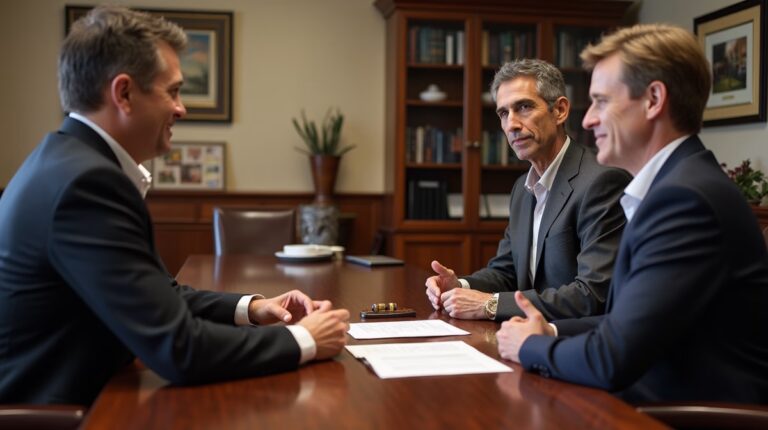
Dax just received notice that his mother’s estate is being challenged. She passed with a complex trust structure, and the beneficiaries are already suspicious of his handling of a valuable art collection. He’s spent the last six months meticulously documenting appraisals, coordinating with specialists, and defending his decisions – work far beyond the standard duties of an executor. He’s now facing legal bills and needs to understand if, and how, he can recover the time and expense involved in preserving the estate’s value.
Navigating executor fees, particularly when exceeding statutory rates, requires a precise understanding of California Probate Code and a careful approach to court petitions. As an estate planning attorney and CPA with over 35 years of experience, I’ve guided numerous executors through this process, often leveraging my tax background to maximize estate value and justify increased compensation. The key is demonstrating extraordinary services that go beyond the routine administration of an estate.
What Constitutes “Extraordinary” Services?
Simply put, “extraordinary” means more than what a reasonable person would expect from an executor. Regularly paying bills, distributing assets as directed, and handling basic paperwork do not warrant additional compensation. However, tasks such as defending against trust contests, complex asset valuations (especially art, collectibles, or business interests), litigation management, or dealing with unusually contentious beneficiary disputes can justify an increased fee request. The standard statutory fee, calculated as a percentage of the estate’s value, is typically reserved for straightforward administrations.
To successfully petition for extraordinary fees, you must meticulously document the extra time, effort, and specialized knowledge expended. Keep detailed records of all activities, including dates, times, descriptions of the work performed, and any associated expenses. This isn’t just about hours worked; it’s about the value added to the estate. Did your actions save the estate money? Did you successfully defend against a claim that could have significantly reduced its value? These are critical points to emphasize.
How Do I Calculate Extraordinary Fees?
California Probate Code Section 8510 governs executor and administrator compensation. It allows for reasonable compensation based on the value of the estate, the complexity of the administration, and the time and effort expended. While the statutory rates provide a baseline, Section 8510 specifically allows for compensation exceeding those rates if justified by extraordinary services.
You have two primary methods for seeking increased compensation:
-
Hourly Billing: This requires detailed time records, similar to those used by attorneys. You’ll need to establish a reasonable hourly rate, considering your expertise and the prevailing rates for similar services in your area. Be prepared to defend this rate to the court.
Lump Sum Request: This involves determining a specific dollar amount that fairly compensates you for the extraordinary services rendered. This requires a clear justification linking the amount to the value of the services provided.
It’s crucial to be transparent and reasonable in your calculations. Inflated claims are likely to be scrutinized and denied. Furthermore, remember the potential for overlap with attorney fees. If you incurred legal expenses to defend the estate, you can’t double-dip by also claiming executor fees for the same work.
What if Beneficiaries Object?
Objections from beneficiaries are common, especially in contentious estates. If a beneficiary objects to your fee request, you’ll need to file a formal petition with the court, outlining your services and justifying the requested compensation. The court will then hold a hearing where you and the objecting beneficiary can present evidence and arguments.
It’s critical to anticipate potential objections and address them proactively in your petition. Clearly explain why your services were extraordinary, how they benefited the estate, and how your fee request is reasonable in light of the circumstances. Supporting documentation, such as appraisals, expert reports, and legal correspondence, is essential.
The CPA Advantage: Beyond the Numbers
As a CPA as well as an attorney, I often see executors overlook significant tax implications. For instance, accurately establishing a step-up in basis for inherited assets can save the estate and beneficiaries substantial capital gains taxes. Similarly, proper valuation of illiquid assets—like real estate or closely held business interests—is crucial for minimizing tax liabilities. These services add considerable value but aren’t always reflected in the traditional calculation of executor fees. Highlighting these tax-saving measures in your petition can significantly strengthen your case.
Moreover, remember that for deaths occurring on or after April 1, 2025, the small estate threshold for personal property is $208,850 (per CPC § 13100). This allows heirs to skip full probate via affidavit. This rate is fixed and will not adjust again until April 1, 2028. Also, under AB 2016, primary residences valued at $750,000 or less qualify for simplified transfer for deaths on or after April 1, 2025. In 2026, this remains active law, allowing qualifying homes to bypass formal probate via a simplified petition rather than a 12-month court process.
Understanding Potential Liabilities and Bonds
Before you even begin the process of seeking extraordinary fees, consider potential personal liability. Unless explicitly waived in the Will or by all beneficiaries in writing, the court mandates a Surety Bond per Probate Code § 8482. This bond protects the estate’s value; the premium is calculated based on the total value of personal property plus annual income, often costing the estate thousands in non-refundable fees.
Furthermore, probate cannot be closed until the mandatory 4-month creditor claim period expires under Probate Code § 9100. This window begins the day ‘Letters’ are issued to the representative, serving as a mandatory cooling-off period even if the estate has no known debts. Failing to adhere to these timelines can create personal exposure.
Finally, the 2026 ‘TCJA Sunset’ was officially averted by the One Big Beautiful Bill Act (OBBBA). As of January 1, 2026, the Federal Estate Tax Exemption is permanently set at $15 million per person ($30 million for married couples), effectively eliminating the federal ‘Death Tax’ for nearly all families. While this doesn’t directly affect executor fees, it underscores the importance of remaining up-to-date on current tax laws.
How do probate courts in California evaluate intent when a will is challenged?

In California, a last will and testament is reviewed under probate standards that focus on intent, capacity, and execution. Clear drafting reduces ambiguity, limits misinterpretation, and helps families avoid unnecessary conflict during estate administration.
- Authority: Define executor duties clearly.
- Protection: Establish guardianship for minors.
- Location: Confirm residency rules.
For California residents, understanding how intent, authority, and compliance interact is one of the most effective ways to protect family harmony and estate integrity. A will that anticipates probate scrutiny is far more likely to be honored as written and far less likely to become the source of unnecessary conflict.
Official 2026 California Probate Standards & Resources
-
Probate Process: California Courts – Probate Overview
This official judicial guide provides a high-level roadmap of the California probate system, defining the roles of executors and administrators while clarifying which assets are subject to court supervision and which bypass the process entirely. -
Unclaimed Property: California State Controller – Unclaimed Property
A vital resource for estate representatives to search the “Estates of Deceased Persons File,” which contains millions in forgotten bank accounts, uncashed checks, and insurance benefits that must be marshaled and reported as part of a complete estate inventory. -
Probate Code: Probate Code § 13100 (Small Estate Affidavit)
The primary statute governing the simplified collection of personal property; as of 2026, it allows successors to bypass probate for estates valued at $208,850 or less (for deaths after April 1, 2025), provided a 40-day waiting period has elapsed. -
Local Court Rules: Riverside Superior Court – Probate Division
Provides essential “Local Rules” and “Proposed Form Changes” effective January 1, 2026, including specific requirements for remote appearances and the mandatory use of the Riverside eSubmit Document Submission Portal for all probate matters in the Inland Empire. -
Tax Guidelines: Franchise Tax Board – Estates and Trusts
The official California tax portal for fiduciaries, outlining the 2026 filing requirements for Form 541 (Fiduciary Income Tax Return) and explaining when real estate withholding (Form 593) is required for the sale of inherited property.
|
Attorney Advertising, Legal Disclosure & Authorship
ATTORNEY ADVERTISING.
This content is provided for general informational and educational purposes only and does not constitute legal, financial, or tax advice. Under the California Rules of Professional Conduct and State Bar advertising regulations, this material may be considered attorney advertising. Reading this content does not create an attorney-client relationship or any professional advisory relationship. Laws vary by jurisdiction and are subject to change, including recent 2026 developments under California’s AB 2016 and evolving federal estate and reporting requirements. You should consult a qualified attorney or advisor regarding your specific circumstances before taking action.
Responsible Attorney:
Steven F. Bliss, California Attorney (Bar No. 147856).
Local Office:
The Law Firm of Steven F. Bliss Esq.43920 Margarita Rd Ste F Temecula, CA 92592 (951) 223-7000
The Law Firm of Steven F. Bliss Esq. is a practice location and trade name used by Steven F. Bliss, Esq., a California-licensed attorney.
About the Author & Legal Review Process
This article was researched and drafted by the Legal Editorial Team of the Law Firm of Steven F. Bliss, Esq.,
a collective of attorneys, legal writers, and paralegals dedicated to translating complex legal concepts into clear, accurate guidance.
Legal Review:
This content was reviewed and approved by Steven F. Bliss, a California-licensed attorney (Bar No. 147856). Mr. Bliss concentrates his practice in estate planning and estate administration, advising clients on proactive planning strategies and representing fiduciaries in probate and trust administration proceedings when formal court involvement becomes necessary.
With more than 35 years of experience in California estate planning and estate administration,
Mr. Bliss focuses on structuring enforceable estate plans, guiding fiduciaries through court-supervised proceedings, resolving creditor and notice issues, and coordinating asset management to support compliant, timely distributions and reduce fiduciary risk. |